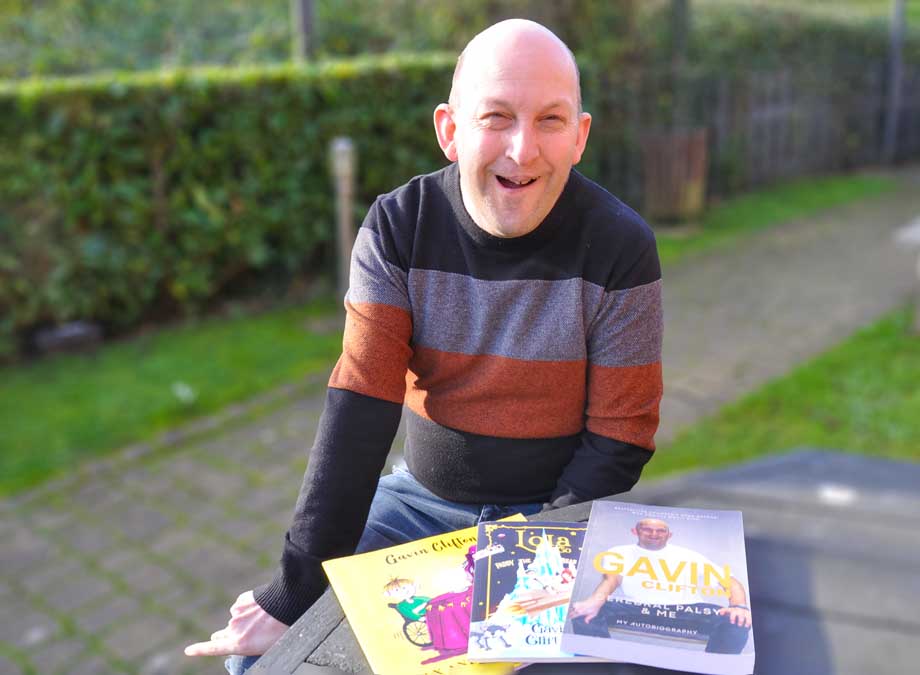
Gavin Clifton is a UK-based children’s author, inspirational speaker, disability advocate and lyricist. Known professionally as The Disabled Writer, Gavin was born with cerebral palsy and a severe speech impairment.
‘Everyone with cerebral palsy is different’ is completely true. It might also be the most useful sentence ever invented for not doing anything.
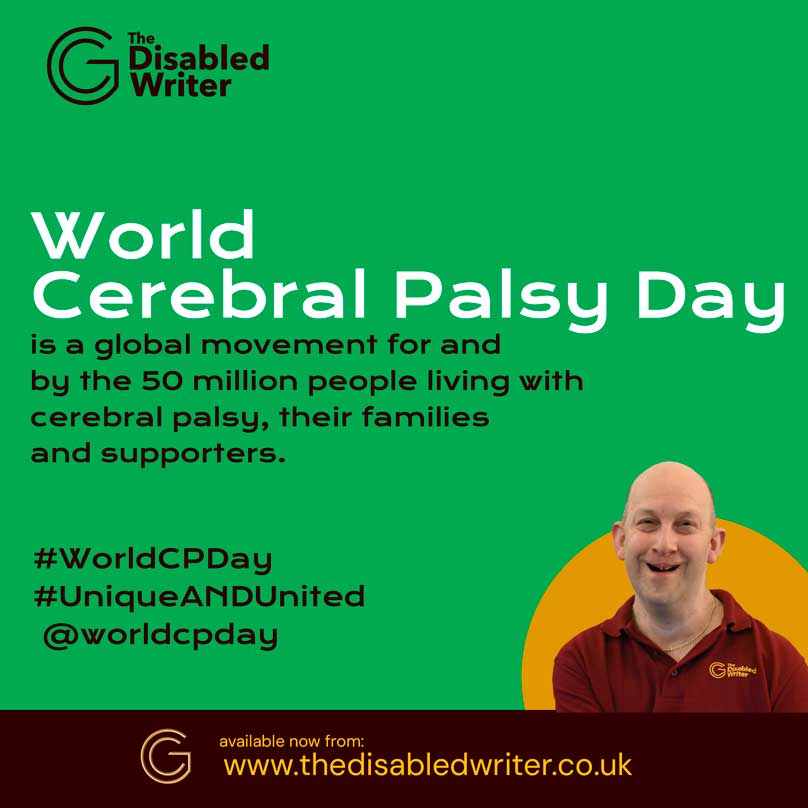
This year, World Cerebral Palsy Day (2026) is on Tuesday 6th October, and the theme is Unique and United, back for a second year. A year ago, on the same day, I became an ambassador for Cerebral Palsy Cymru. So I’ve had twelve months to think about what those two words really mean.
I walk, go to the gym, and work out within my own limits. Lately my hamstrings have been tightening up more often, and on those days my body can use up to three times the energy of a non-disabled person’s to do the same things.
A while back, I started using a wheelchair again. ‘Again’ is a word that sometimes surprises people. When I was a child, my hamstrings tightened so quickly when I walked that I sometimes used a wheelchair on our caravan holidays in Devon, so we could get around quicker and stay out longer. Then for years you wouldn’t see me in one. I would go through the pain barrier some days to stay out playing with friends.
People expect disability to go in one direction. They perceive that your disabilities improve over time, which makes a nice story, or that you get worse, which makes a sad one. Going back to using a wheelchair as an adult doesn’t fit either, so people assume the worst. They ask what’s happened. Nothing’s happened. My body is doing what it has always done. I’ve just stopped pretending that energy is free.
Using the chair for mobility isn’t me giving up on walking. I still walk; I just use my powered wheelchair when walking costs me the rest of the day, so I can leave a bit of energy in the tank.
So that’s one man who walks, uses a wheelchair and talks with a device, sometimes all in the same week, and looked completely different on paper ten years ago. If cerebral palsy can be that different inside one person, ‘unique’ is underselling it.
Another person with cerebral palsy might do none of that. They might be able to walk farther than I can, or not at all. They might speak more clearly than I can, be nonverbal, or use eyegaze or switches. An injury to the developing brain causes cerebral palsy, but everyone’s experience of it is unique. So yes. Unique.
The trouble is what people do with that. ‘Every case is different’ sounds respectful, and it’s usually said kindly. But listen to where it often leads. We’ll take it as it comes. We’ll sort the access on the day. We’ll work out the communication when they get here. We’ll see, and the ‘we’ll see’ tends to mean the disabled person turns up and does the planning on the spot, in front of everyone. Sending my accessibility rider out in advance is meant to cut that bit out. It doesn’t always.
This isn’t treating someone as unique. It’s treating difference as a surprise, but the difference is the least surprising thing about us. If you know for certain that the next person with cerebral palsy through the door won’t need the same things as the last, you already know enough. More time on the clock and more than one way to answer. Allowing space for a wheelchair if someone is using it that day, or even someone who’s happy to wait a while for someone to form a sentence using their communication device.
None of that needs my diagnosis. It needs to consider everybody in all your planning processes.
Which brings me to ‘united’, and I think people misunderstand that word too. United doesn’t mean we’re the same. It certainly doesn’t mean we all agree. It means we keep walking, rolling and typing into the same unready rooms.
Last month I gave a talk at Communication Matters in Leeds. More than five hundred people attended. AAC users, families, and professionals. In a room like that, communicating differently isn’t odd. That’s the ‘united’ bit for me. A space that was built for us.
On World Cerebral Palsy Day, landmarks will light up green. Then on Wednesday, the lights will dim for another year, and somewhere, someone will tell a person with cerebral palsy that every case is different, mean it kindly, and leave it there.
It is. Every case is different. That was only ever meant to be the start of the sentence.