I Watched ‘I Swear’ and I Wasn’t Expecting to See Myself.

Gavin Clifton - The Disabled Writer

The Film


John Davidson didn’t envisage himself as an educator. The world just kept getting him wrong until he had no choice but to start correcting it.
I watched ‘I Swear’ on Netflix, the BAFTA-winning biopic about the Scottish Tourette’s campaigner who went from being brutally misunderstood in 1980s Britain to rightfully receiving an MBE for services to the Tourette’s community. Our disabilities couldn’t be more different, and our journeys look nothing alike on the surface. Yet, somewhere in the first twenty minutes, watching a young John Davidson be failed repeatedly by the people who should have supported him and known him better, something tugged at my soul and didn’t move.
Not because I recognised his condition, but I know what the lack of understanding can do. I’ve lived it.

What I Recognised
The way misunderstanding compounds. The way people’s assumptions become your problem to overcome. That’s not just a Tourette’s problem; it’s an overall disability experience that spreads across conditions in a way disability representation rarely acknowledges, because most of it still broadly focuses on the specifics. Truthfully, that experience of being misunderstood feels remarkably similar regardless of your disabilities. This is what made the first twenty minutes an emotional watch.

What People Get Wrong
People tend to assume that disabled people who become advocates, write, speak, and educate, do it purely out of necessity. That the choice was never really theirs.
It’s a bit of both. I had a turning point, so did John Davidson. But a turning point doesn’t exist in a vacuum. What shapes it is everything that came before. Those moments of being misunderstood, the authorities who had your future mapped out for you without finding out what you are truly capable of, the systems that had no category for who you were.
What ‘I Swear’ shows, keeping within the narrative of the story, is that John Davidson’s journey into advocacy wasn’t born from a single moment of inspiration. It was forced upon him. He became an educator because the alternative was to keep absorbing a world that had decided, without asking, that his Tourette’s journey wasn’t real or valid.

Fear and Purpose
I write under the brand name ‘The Disabled Writer,’ creating disabled characters and books that centre disability, acceptance, identity, and the kind of courage that doesn’t announce itself. I’m also a U.K. Inspirational and disability awareness speaker. I write truthful blogs and articles about my experiences of living with cerebral palsy. I have also been writing song lyrics and collaborating on writing songs for over twenty years, working with the likes of 80s hitmaking band The Korgis and Phantom of the Opera’s Peter Karrie, and if you ask me why I started writing, the honest answer is, it’s a bit of both.
There was always a burning ambition deep down in my soul, even when I was working at a newspaper for seventeen and a half years. A genuine desire to create something within the boundaries of the world that truly mattered to me personally, even though my self-acceptance has been a rollercoaster ride. Still, somewhere in my conscience, I knew I had the potential to use my journey to make a real difference. I just needed to fight the fear of not being understood so I could become the man I am today. You can only stare at your fears in the face for so long before you either succumb to them or banish them for good.
But I think it’s worth being honest that necessity and choice aren’t always as separate as the inspirational narrative would have us believe. I was scared of being seen, of failing publicly, and of what people would think. For a long time, I wasn’t sure which was driving me more, fear or the purpose. I needed to figure this out, and I eventually did it through writing my autobiography, Cerebral Palsy and Me.

What the Film Actually Does
‘I Swear’ will make a lot of non-disabled people feel educated and moved. I truly hope it does just that. The performances are extraordinary, and the story is unfiltered.
But if you’re a disabled person watching it, I think you might feel something different. A recognition that sits somewhere between pride and emotional exhaustion. The pride of seeing someone turn their life around, the exhaustion of knowing how much determination and energy it takes, and the constant pushback that comes with it. The never-ending assumptions and the misunderstanding that follows you from room to room, year to year, however clearly you try to explain yourself. This is just one example of what survival with any dignity sometimes looks like when you have a disability.
John Davidson didn’t set out to be a role model. He just wanted to be understood. That’s the difference, and the film is honest enough to show it.


I came away not feeling inspired but feeling understood. Which, if you’ve spent any time being misunderstood, you’ll know is a completely different thing.

Space Exploration Doesn’t Start with Rockets. It Starts with Stories

The Moon is Trending

In April 2026, the Artemis II crew flew around the far side of the moon. They were the first humans to do it in over fifty years. The images were everywhere, with the Earth rising behind the lunar surface. A solar eclipse seen from a place no living person has witnessed, the whole world watched in awe, and to be honest, I became quite emotional.

When NASA asked the crew to describe the experience in a single word, mission specialist Christina Koch said ‘humility’. Not triumph or pride, but humility. I have been thinking about the meaning of that word.

A Rubbish Dump on Earth

I wrote a space-adventure children’s book back in 2020, and the character isn’t an astronaut. He’s a polar bear teddy stripped of his powers, dumped in a rubbish bin, and rescued by a nine-year-old girl called Oakleigh. She builds a rocket out of a cardboard box and kitchen roll holders and names it Hark-9.

People sometimes describe Paddy the Polar Bear Teddy as a cute space adventure story; it is, but it’s also about what happens when you land somewhere unfamiliar, when your normal has been taken away, and when the world you are navigating was unintentionally built without you in mind. I don’t have to create or imagine that; it’s the world I live in.

Tuesday Morning

There’s a moment in the book where Paddy lands in a rubbish bin on Earth and tries to use his magic to get home, and nothing happens. His powers are gone, he’s alone in a place he doesn’t understand, surrounded by creatures he’s never seen, and nobody can hear him. That’s not just fiction; it’s a Tuesday morning for many disabled people. You arrive somewhere, the thing you usually rely on isn’t working, and you have to figure it out in real time.

The Overview Effect and Taking a Step Back

What I find interesting about the Artemis mission is that the astronauts kept talking about perspective. Victor Glover, the first black astronaut to travel beyond the Earth’s orbit, looked back at the Earth and said that from up there, we all look like one thing. No matter where you’re from or what you look like. That’s the Overview Effect, the cognitive change that happens when you see your planet from far enough away that all the categories we cling to just fall away.

Stories do the same thing, no, not by sending you two hundred and fifty thousand miles into space, but by putting you inside someone else’s experience and letting you see it from there. When a child reads about Paddy losing everything and still finding a way forward, they are not learning about polar bears. They are learning that courage doesn’t require certainty, and that kindness, the kind where you pull a stinky teddy out of a rubbish dump because you see something worth caring about, is not soft, but the thing that starts the whole adventure.

The Villain Who Was Hiding

Then there’s Queen Zeena, the villain of the book; she’s a walrus who creates devastating storms across her entire planet because she’s terrified of being seen as she is. She thinks being different makes her unlovable, so she hides behind destruction. She’d rather ruin everything than risk someone looking at her and confirming her worst fear.

That fear factor, the shame, children understand it, even if they can’t pinpoint why yet. They know what it feels like to think something about yourself is wrong. Zeena isn’t defeated by force, but by someone who tells her the truth, that everyone is beautiful, and that what matters is who you are from within, and it’s okay to be different, accept yourself, and others. Paddy says it plainly because he believes it, and he’s lived it.

The Real Launchpad

Every astronaut was once a child imagining space. They started with stories, curiosity, and a sense of wonder about what’s out there. The Artemis II crew didn’t wake up one morning, knowing how to fly around the Moon. They followed their dreams, slowly building up experience, fuelled by imagination and the accumulated belief that anything was possible.

That’s what children’s books do when they do what job they’re supposed to do. They don’t just entertain; they teach, rehearse, give children a version of courage before they find it, and show them that difference isn’t always an obstacle, but sometimes it’s the qualification. That the people best equipped to explore the unknown are often the ones who’ve already had to.

Oakleigh doesn’t hesitate when Paddy asks her to fly to another planet, doesn’t have the right tools or experience, but still, she has cardboard, fairy dust, and the willingness to accompany him on an adventure. That’s not a fantasy; it’s how the most interesting things in life sometimes start.

The Artemis crew came home; the footage was extraordinary. But somewhere tonight, a child is lying in bed with a book open, imagining something impossible.

That’s where the next mission begins.

Disabled Creatives Don’t Need a Space - We Need a Stage.

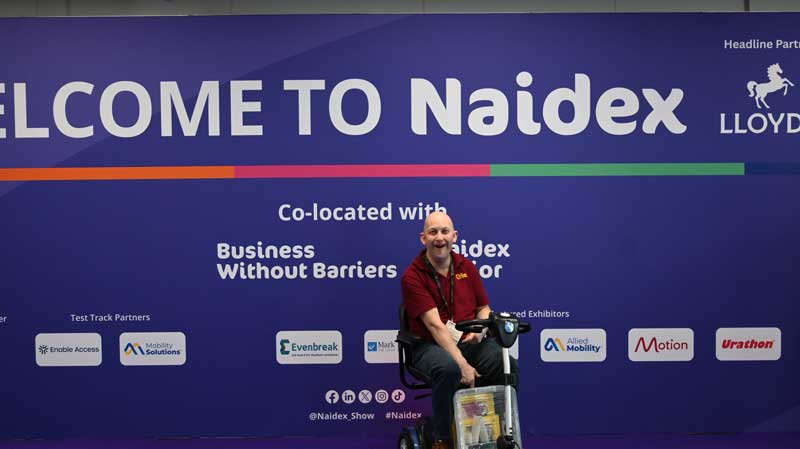
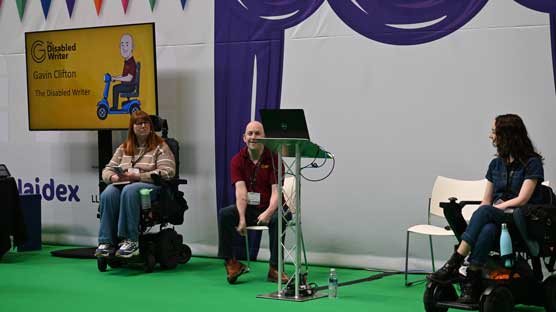
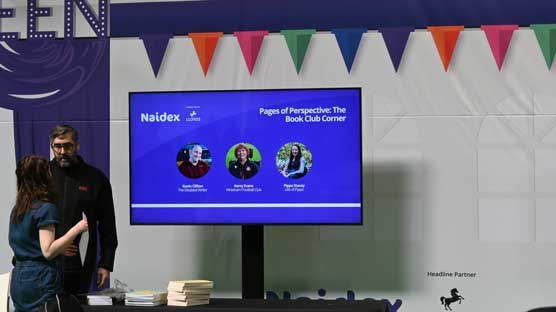
I sat on a stage at the Birmingham NEC and delivered my talk, From Page to Possibility: How Stories Shaped My Journey. I spoke via AI Voice to a room full of people from the disability community who came to listen. That alone felt worth writing about.


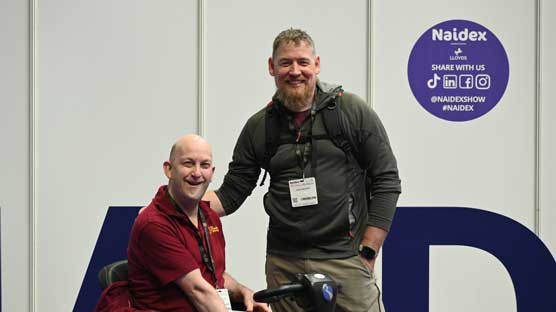
Gavin Clifton, in front of a banner for Naidex 2026


Naidex is one of the biggest disability events in the world. But what struck me most wasn't the technology, or the product demos, or the innovation on display. It was the room where nobody had to explain themselves. Where disability wasn't a topic to be handled carefully, it was just the air we were all breathing. That made me think: what would it take to carry that feeling outside of here?

Because when that feeling stays inside one event, it's a nice day. When it spreads into workplaces, schools, conferences, retail and hospitality spaces, and festival line-ups, it starts to change what people assume disabled people can do. Not just attendees or just audiences. But the ones making the work, leading the conversation, shaping the culture.

There's a thing that happens when disabled people are in a space together, and nobody else is setting the pace. You stop translating and performing the version of yourself that makes other people comfortable. You stop pre-empting the questions, the tilted heads, the 'you're so brave.' You exist, that sounds like nothing, but if you've never had it, it's everything.

After my talk, a stranger came up to me and told me it meant something to them. Not that it was inspiring, or that I was brave; that it meant something. That's a different word; inspiration asks nothing of the listener, meaning does. It says, ‘I'm taking this with me.’


Why It Matters Who Holds the Mic

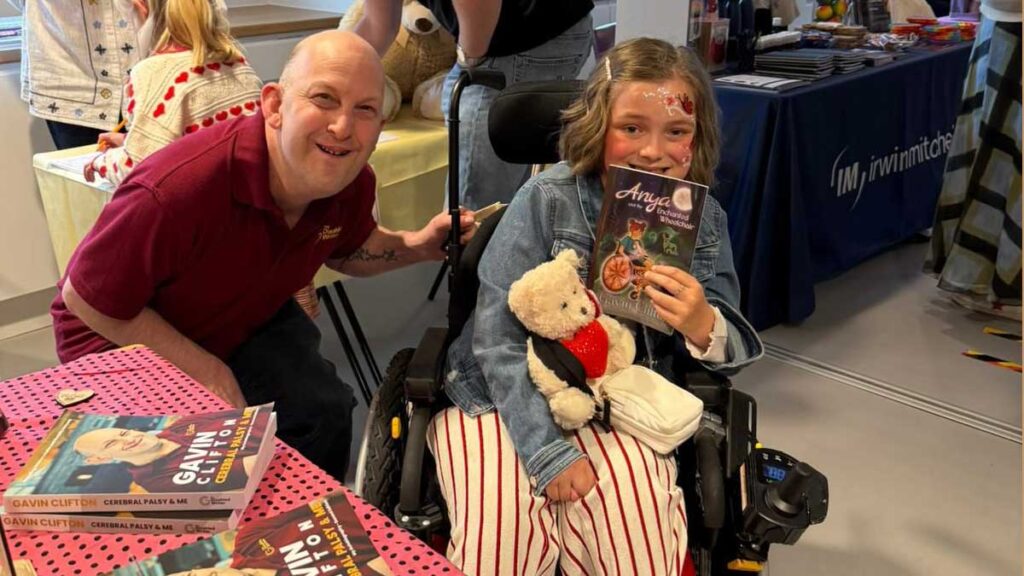
That's what I've always tried to do with my work. When I wrote children's books like Max and the Magic Wish and Anya and the Enchanted Wheelchair, I put the disabled protagonist at the centre of the story, not as someone to be pitied or rescued, but as someone living a full life where the story is driven by magic, not by their diagnosis. But when you've spent most of your career being told your story isn't quite mainstream enough, not quite marketable enough, not quite enough. Standing on a stage and having someone tell you it matters hits you differently.

Events like Naidex have spent years getting better at showcasing products for disabled people. The next step is something harder: creating spaces where disabled people aren't just consumers, but contributors. Speakers, entrepreneurs, artists, writers, musicians, and filmmakers. Not as a diversity checkbox or into a twenty-minute slot between product demos. But as professionals, we do the work and are taken seriously for it.

My cerebral palsy shapes how I move and communicate. It doesn't shape what I have to say. I may not speak clearly, but I stood in front of a room full of people and said something that mattered to at least one stranger. That's not inspiration; it’s just what happens when someone is given a platform and has something worth saying.

I left Naidex feeling proud. Not grateful, but proud. Gratitude says thank you for letting me in, and pride says I belong here. I earned this, and I’d like to be booked just like any other professional.

Gavin is a children's author, inspirational speaker, and disability advocate. To book him for a talk, workshop, or school visit, visit his contact page.

World Book Day 2026 wants us to #GoAllIn.

World Book Day 2026 wants us to #GoAllIn. Fabulous! Let’s do it so EVERYONE feels included.

World Book Day always gives me two feelings at once. On the one hand, I’m genuinely all over it. Any excuse to get books into children’s hands is a good thing.

On the other hand, I slip into a moment of impostor syndrome, because every year, there’s a point where it can become overwhelming for some. Reading becomes a costume day with a bookish badge, rather than a reading day with some fancy dress alongside.

World Book Day - and image of a series of books by author Gavin Clifton

If you’re the child who already finds school challenging, the one who’s different, disabled, anxious, overwhelmed, the child who has to work twice as hard just to be heard, World Book Day can quietly turn into one more day where you feel like you’re the outsider.

World Book Day 2026 is pushing ‘Go All In’, which is incredible and long overdue. I want us to mean it, not just say it.

What ‘Go All In’ means to me

When I hear ‘Go All In’, I don’t hear ‘make it bigger and louder’.

Stop acting like reading only counts if it’s silently stereotyped, traditionally means sitting at a desk with a book in front of you, and done in the exact way school finds easiest to manage.

Because that version of reading leaves many children out. Disabled children who use Augmentative and Alternative Communication, who need breaks, sensory support or prompts, who use audiobooks. Children who can read, but not in a way that fits the neat little box adults prefer.

If World Book Day is serious about reading for pleasure, it has to be serious about disability awareness across all areas of literacy, and about intertwining accessibility and inclusion wherever possible.

The truth about ‘reading confidence’

When a child says they’re ‘not really confident about reading’, adults often take it as an attitudinal defect. I think a lot of the time it’s something else. It’s self-protection.

If reading has mostly meant being put on the spot, being timed, being corrected mid-sentence, or having a whole class listen while you try to get the words out, you start to learn that books come with embarrassment attached. You might still like stories; you might still be curious, but you stop wanting to be seen trying.

For disabled children, especially those who use AAC or need adjustments, it can be even more challenging. Not because reading is impossible, but because the environment keeps saying, hurry up, do it the normal way or do it without the tools that help. That chips away at confidence faster than people realise; it can fuel impostor syndrome and leave people feeling left out altogether.

Obviously, not every child has the same barriers. But plenty of children have had reading turned into a test they keep failing in public, even when the adults involved mean well and are just trying to keep the lesson moving.

World Book Day can either reinforce that same pressure or be the moment we let children create the reading experience without judgment or performance.

What I want schools to do for World Book Day 2026

This isn’t about getting it perfect. It’s about making everything more accessible, inclusive, and FUN!

  1. Make access visible and normalise it.
    Put audiobooks on the table, literally. Let children see text-to-speech in use without objection. Say out loud that reading with your ears counts, and that technology is a collaboration tool. Because some children have been taught that they only ‘really read’ if they learn in the same way as everyone else does.

A quick checklist that actually matters

You can call this counterintuitive; I call it the difference between ‘everyone’s welcome’ and ‘not accessible to everyone’.

If that list feels like extra work, I get it. Schools are stretched. But disabled children are stretched and confronted by ableist barriers every day, just for existing in systems that were not built with them in mind.

If you’re a parent reading this

If your child loves World Book Day, enjoy it, encourage them to take part, and support them. I mean that.

If your child dreads it, you're not imagining things, and they're not being difficult. I'll let you in on a little secret. I hate dressing up! Costumes are designed for a 'standard' body with fiddly fastenings, tight fits, and materials that can irritate sensitive skin. When dressing already takes effort, adding a costume feels like an unnecessary battle. Also, when you already stand out because of how you move or speak, drawing even more attention to yourself is the last thing you want. It's not about being difficult; it's about dignity, energy, and being seen just the way you are.

You can ask the school what the plan is for those who do not dress up. You can ask what formats are available, ask whether audiobooks ‘count’ in class, or even ask if your child can take part without performing.

If the answers are vague or awkward, that’s your clue. It usually indicates there isn’t a plan, or the plan relies on your child just coping. It means the reasonable adjustments are treated as a favour rather than a normal part of how the school operates. It means inclusion is happening on paper but not in the day-to-day areas where it actually matters.

None of this makes you a ‘difficult parent’ for asking. It makes you a parent who’s paying attention.

If a school can’t clearly explain how World Book Day works for children who don’t dress up, who use AAC, need quiet space, or who read in different formats, then it’s not really set up for them.

That’s what needs to change, not your child. Going all in means building a reading culture where disabled children are not treated like exceptions. Where access is normal and where communication is respected.

World Book Day can be that, it genuinely can.

But only if we stop using the fun bits as a distraction from the hard bits.

Cerebral palsy is lifelong: What I wish people understood beyond the stereotypes

Cerebral Palsy Awareness Month always makes me reflect on how far I have come in life. It really does, not because I suddenly remember that I have disabilities, but because it’s one of the few occasions where people actively look in our direction. You can almost taste and feel the difference between ‘being seen’ and ‘being understood’. They are not the same thing, and if we’re honest, most of the disconnect lies in between them.

Gavin Clifton, Author, standing next to a banner for Cerebral Palsey Cymru

I’m writing this as someone living with cerebral palsy and a severe speech impairment, also as an ambassador for Cerebral Palsy Cymru, a role that genuinely means a lot to me, standing shoulder to shoulder with other people and families living with, managing, supporting, and advocating for the condition.

What cerebral palsy is, and why the ‘one story’ version fails

Cerebral palsy is a lifelong condition that affects movement, balance, coordination, and posture. It’s neurological and physical, and it doesn’t affect one person in the same way, which is exactly why the public’s understanding of it is often a little confused.

The variability is far-reaching, and this is the most important statistic I want to highlight throughout Cerebral Palsy Awareness Month 2026. If you have met one person with cerebral palsy, the next person might have completely different needs, a different level of mobility, a different experience of pain, fatigue, balance, coordination, speech, fine motor control, or all these.

The myths that still shape how we’re treated

One of the myths I still hear, and it honestly still surprises me, is the assumption that cerebral palsy is mainly a childhood thing. It isn’t, it’s lifelong. The assumption that happens is not that the condition disappears; it’s that support often becomes harder to access as you grow up.

Another idea is that CP automatically means a learning disability. Some people with cerebral palsy do have learning disabilities, for which I have complete admiration; others do not, but what keeps happening is that people treat appearance or speech as evidence of academic ability, or even inability. I’ve said it plainly in my autobiography because it frustrates me that much. I often get asked if I went to school, and the answer is yes; my disabilities are physical and not academic.

That assumption is not harmless; it alters expectations and opportunities, and in some cases, it changes the whole direction of a child’s education.

For me, support made the difference. I received one-to-one assistance from nursery onwards, which meant I could access school in the way I needed to. This changed my life forever, and for the better.

Lived reality, the bits people don’t see, and the bits you don’t forget

A lot of the public’s understanding of cerebral palsy is based on what people can see. The problem is that some of the most significant parts are not obvious to a stranger.

Fatigue is a big one. So are stamina, pain, tightness, and variability, too. Some days your body cooperates more than others, and the world tends to read that as inconsistent rather than reality.

Then there’s the social side, the childhood side, the stuff that stays with you.

One detail from my own life that always comes back to me is the safety helmet I wore in the school playground when I was learning to walk and still mastering balance. I remember feeling anxious about it because it made me look even more different, but it was a small price to pay if it meant avoiding head injuries. I even joked that I looked like I was about to do twelve rounds with Mike Tyson.

That’s what I mean when I say the lived version of cerebral palsy is not just medical. It’s social. It’s about being a child who wants to join in, while also having to think about safety and access in a way other children never do.

I’ve also been lucky in the way my friendships formed, because in my world growing up, I was just Gavin. My friends remember me wearing different shoes and that special helmet, and they remember that conversations took longer, but we still played the same games, and they adjusted so I could join in.

That is inclusion in its simplest form, people deciding you belong, and then acting like it.

What actually helps, and what I wish people would stop getting wrong

Here’s the good news, a lot of what helps is practical, and it’s not complicated.

In schools, it starts with expectations. If you assume a disabled child is less capable before you’ve even learned who they are, you build a ceiling over their head. If you assume competence and put support in place, you give them a chance to realise their own potential. I believe every child deserves the right to an education, and I’m very aware that the support I had shaped my outcomes.

In public life and services, good practice looks like speaking directly to the disabled person, not treating them like a side character in their own environment. I’ve written in my autobiography, Cerebral Palsy and Me, about how infantilising it feels when people talk in the third person around you, and how much better it is when someone asks you directly first.

In workplaces and retail, it’s the same principle. Ask what helps, build flexibility into systems, not just into individual kindness. Remove friction where you can; most barriers are not created by ‘the condition’, they’re created by underthought systems and rigid assumptions.

To make this real, not abstract, I never thought I’d need a scooter. Now I wouldn’t be without it. It’s my freedom to live, not just exist.

Why Cerebral Palsy Cymru matters, and what I want this month to lead to

I’m an ambassador for Cerebral Palsy Cymru because I care about support grounded in lived experience. In my book, I describe becoming an ambassador as the start of something meaningful, a role that means everything.

Organisations like Cerebral Palsy Cymru matter because they support people and families, and push for better understanding and practice, which is where the long-term change stems from. Not one month of awareness, but steady improvement in how systems respond, how communities include, and how people with CP are treated across a lifetime.

Here’s what I’d love people to take away from this month.

Cerebral palsy is lifelong, and it is varied. Support, access, and inclusion need to be lifelong and individual too.

If you do one thing differently after reading this, pause before you assume, ask what helps, then follow through.

That’s how awareness turns into change and makes a lasting difference: it’s okay to be different and to accept yourself and others.

Why The National Year of Reading 2026 Matters to you

Why The National Year of Reading 2026 Matters to you

Growing up, I rarely saw disabled characters in books. That’s why I have always had a burning ambition to write a children’s book about disability and acceptance, with disabled characters at the centre of the story, not as side characters.

A series of Childrens books by Gavin Clifton

The National Year of Reading 2026 matters. Reading can help disabled children feel seen, and it can help everyone else learn how to respond to difference with knowledge, confidence, and respect, not discomfort. I’ve lived long enough to know that people often judge your intelligence by your speech, your movement, or how long you take. Stories written with creativity and lived experience can challenge that in a way a poster slogan never will. Books don’t smash through barriers on their own, but they can change attitudes.

2026 has been designated the National Year of Reading, a UK-wide campaign inviting and encouraging people from all walks of life to make reading an important part of everyday life. This literacy-inspiring mission is not just another school initiative or merely an authority-led policy drive. It’s more, it’s about intertwining reading with what people already enjoy, care deeply for, and love doing, things like music, sport, games, food, social events, communities you live in, and culture, inviting everyone to see how reading can enrich their daily passions and interests.

The chosen slogan, ‘If you’re into it, read into it,’ is simple and clear, which helps the audience feel appreciated and confident in its message. Still, it's more than a catchphrase. It challenges the traditional stereotype that reading is a separate academic world notion and instead positions it as a route to your desired passions and interests, according to the National Year of Reading website.

That matters to me as someone living with cerebral palsy and severe speech impairment. I know how powerful reading can be when it feels connected and alive, not locked in school worksheets or condensed into ‘the right way to read’. It’s about emotion, connection, identity, meaning, accessibility, and inclusion.

What the campaign actually does

Here’s what the National Year of Reading aims to do over 2026:

It’s a Department for Education‑backed movement delivered by the National Literacy Trust with partners from across the literacy and cultural sectors.

What reading means in 2026

Here’s the twist: reading isn’t only about books anymore. The campaign says reading includes print, digital, audio, podcasts, comics, blogs; anything where words communicate ideas, stories, meaning and connection, and as you’ll already know, especially due to my severe speech impairment, any moment to which words and communication clash for the power of good, these moments can become powerful tools to transforming the lives of so many people.

That matters to inclusion. People with different abilities, reading strengths and interests don’t all process written language the same way. Recognising an audiobook as reading, a fan blog as reading, or a magazine article as reading makes space for your way of engaging with words.

This aligns with what I’ve said often: reading doesn’t have one shape. The campaign’s broad definition can help tilt our understanding, empathy, and cultural awareness towards accessibility and inclusion.

You don’t need to read a 400-page novel to take part.

Where this campaign needs to connect with real accessibility

I’m encouraged by the scale and ambition of the National Year of Reading. But big campaigns only become meaningful when they’re accessible to everyone.

These accessibility questions matter when ‘reading culture’ is intended for everyone. Official accessibility features are basic (screen readers, font resizing, alt‑text guidance on the site), but I’d like to see deeper inclusion efforts, such as plain language versions, captioned content, multi‑format reading activities and support for libraries to adapt delivery. (The campaign’s accessibility statement focuses on web settings right now, not the broader campaign experience.)

This gap is where disability awareness really matters. Campaigns say reading is for all. Reality is often different without thoughtful, accessible, assistive and inclusive design, and materials.

If the National Year of Reading is for everyone, access has to be built in

Big reading campaigns can sound inclusive, but disabled people still hit the same old barriers, like buildings, formats, attitudes, and people speaking over us.

If you’re a school, library, organiser, employer or volunteer group running a reading activity in 2026, start here:

Quick accessibility checklist

Reading can be part of your life, not a separate task

The “Go All In” framing is about relevance. Don’t think of reading as homework. Think of it as a way to deepen your interests. If you love football, dive into match‑day stories. If film moves you, read behind‑the‑scenes features. If lyrics speak to your mood, writing and reading them count.

Accessibility isn’t optional

Reading culture should be built on access, not aspiration, and not taken for granted. If reading means more opportunities and more connections, it must mean accessible ways to take part. For disabled readers, that’s multi‑format reading options, inclusive events, and accessible community spaces such as libraries.

Your mission – not a to‑do list

You don’t have to read the Great British Novel to take part. You don’t have to buy books. You can:

If you’re planning events for 2026, bring disabled voices into the room

If you’re a school, organisation, or library planning National Year of Reading activities, don’t make disability a topic for one week. Put it into the main programme.

This is the work I do as The Disabled Writer. I visit schools and speak at events using AAC (text-to-speech) and AI-Voice, so children see that communication can look different and still carry the same value. It breaks down the initial awkwardness because children are curious and honest. Once they understand the technology, they stop focusing on how I speak and move and start listening to what I’m saying. The most powerful part is that they begin to interact with me, and this is when the inclusive magic truly starts to happen.

If you want a talk that links reading, representation, disability awareness, acceptance, identity, and resilience in a way that children remember. All the details on how to book me are here:- https://www.thedisabledwriter.co.uk/contact/.

Final Word

The National Year of Reading 2026 has the right idea: reading works best when it connects to what you already care about, not when it feels like a task. The whole point of Go All In is that reading can be a part of everyday life. ‘If you’re into it, read into it.’

Now the bit that matters to me: if this year wants to reach everyone, it has to include disabled people, in formats, in events, in schools, in libraries, and in how people treat us when we show up. Accessibility and inclusion don’t come from good intentions. They come from choices.

References:
(Accessed 10th February 2026)

https://goallin.org.uk/.

https://www.gov.uk/government/news/premier-league-and-literary-greats-back-national-year-of-reading.

Using My Voice in a Different Way

Using My Voice in a Different Way


How Assistive Technology Is Opening Doors for People Like Me
I am over the moon to have been invited to BBC Radio Wales with the brilliant Lynn Bowles. That alone was a huge and positive milestone. But what made it even more powerful was how I did it, using my SmartBox TalkPad 8 with a custom-built Grid3 question-and-answer GridSet.
It was the first time I’d ever used this kind of Augmented and Alternative Communication setup in a live setting, even though, live on air, and honestly, it couldn’t have gone better. Smooth, clear, and in real time. I was in complete control. That in itself is a big deal.

Gavin Clifton appearing on BBC Radio Wales


Why This Moment Mattered


For the first time, I was able to fully take part in a live radio interview without relying on anyone else to speak for me. My device spoke my words exactly how I wanted them said. No delays, no one jumping in, no awkward handovers.
Everything I said came directly from me, through my device, and the result was an organic conversation. That might sound like a small thing, but for someone like me with a speech impairment, it’s massive. A few years ago, I wouldn’t have believed this was even possible.


From Frustration to Freedom


When I first started using Augmentative and alternative communication as a child, the technology was slow and bulky. My first device, a Lightwriter, felt like lugging around a brick. It took ages to form a sentence, and by the time I finished, the conversation had already moved on. I often gave up and let others speak for me. That wasn’t freedom or inclusion. It was survival at best.
Fast forward to today, and the technology has changed dramatically. My current TalkPad 8 is somewhat more efficient. It lets me communicate in real time, in interviews, schools, online and in everyday life. It gives me control and independence.


What We Spoke About on Air


Lynn and I talked about quite a lot. How I use AAC day to day, how cerebral palsy shaped my early years, the impact of family support, why inclusion and accessibility are more than buzzwords, and, of course, my latest children’s book, Anya and the Enchanted Wheelchair.
These are things I often speak about, but this time felt different. Doing it live on the radio, independently, using my own voice through assistive technology, made it feel more real. It felt like I was truly being heard, not just by Lynn, but by every person listening through the air waves. BBC Radio Wales still has a significant following from all over the world and connects many communities daily, simply by broadcasting, into homes and workplaces alike.


AAC Is Not a Luxury


Let’s be clear; AAC isn’t a fancy extra. It’s not a backup plan or a bonus feature. It’s a lifeline. It’s the difference between being involved and being left out. It’s the reason I can be an author, a public speaker, and take part in media like this.
Too often, AAC is seen as something to be ‘granted’ or ‘approved’ as if it’s optional, but it’s absolutely not. If someone needs support to communicate, they should have access to the best tools available, no matter their age or background.
Representation and Real Voices
Representation matters. When children or adults with speech impairments or who are nonverbal see someone like me using AAC in public spaces, in the media, or in schools, it tells them something important. That they can be heard too, and that communication doesn’t have to sound a certain way to be meaningful.
The way we speak doesn’t define the value of what we say. People like me have important things to say, and we deserve the chance to say them in our own way, using whatever support works best for us.

Looking Ahead


What happened on BBC Radio Wales wasn’t just a great experience; it was a glimpse into the future, and into what’s possible when technology is used correctly to support disabled people. The technology is there, it’s improving fast, and the opportunities are growing.
With the right support, the right funding, and a change in mindset, AAC can change lives. I know that because it’s changed mine forever.
There’s still work to do. But I’ll keep doing what I can, sharing my story, using my voice, and making sure people like me are seen, heard and valued.
If this blog has resonated with you, or if you know someone who uses AAC or works in education, disability support, the public sector, media, or even in speech and language therapy, please share this blog. Let’s keep these conversations going.

It’s a New Year (2026): Routines, Rest and Showing Up My Way


January is always a mixture of months. New goals, big resets. Pressure to come flying out of the blocks.
But for me, living with cerebral palsy and speech impairment, using Augmented and Alternative Communication, juggling writing, speaking, content, and recovery from eating too much turkey and chocolate over the festive break. January is not about rushing back into things, acting like I am Road Runner out of Looney Tunes and shouting ‘Beep Beep ’ as I whizz by. It’s about finding momentum at a pace that suits everyone.

Gavin Clifton standing on a stage at the Welsh Senedd, delivering a talk.  In the background you can see Cardiff Bay


Writing on My Terms


Most mornings, I aim to write between 800 and 1,500 words. That’s when my energy is at its highest. I write better in that quiet space before the day fills up with email correspondence, liaising with my Sarah, my personal assistant about booking events, school visits and inspirational talks, and sometimes helping to pick my nieces up from school.
Some days I do less, some days my body springs into a controlled Duracell battery mode. If inspiration comes, great, but I don’t chase it nowadays. I’ve learnt not to tie my worth to word count, because it can lead to impostor syndrome creeping on you unexpectedly, becoming fatigued, and falling into the trap of overthinking too much, which I talk about in my autobiography, Cerebral Palsy and Me.

Rest Is Part of the Work


I talk a lot about the writing process, but not enough about what happens outside of it.
Every night at 9 pm, my iPhone switches to Do Not Disturb until 8 am. No messages, no pressure. That time’s mine.
I read on my Kindle, children's books for inspiration, disability memoirs to keep learning, and watch a few series that keep my head busy in a different way.
Netflix, Prime, and a bit of EastEnders, that balance grounds me. So do weekends catching up with close mates. Food, laughter, and normality.
None of it’s wasted. It’s what keeps me showing up.


Speaking, Schools and Something Bigger


Behind the scenes, I’m also planning a packed year of inspirational talks. I’ll be visiting schools and organisations to speak honestly about life with cerebral palsy, inclusion, communication, resilience, identity, and self-worth.
It’s all full steam ahead with educating through sharing my real-life experience living with cerebral palsy, all in a way that’s unfiltered, practical, and mine to share.

This Month’s Reminder


Disabled creatives don’t need to work harder to prove something. We need accessible spaces, time, understanding, and allyship to do things our way, and the confidence to call that enough through advocacy and representation.
I’m starting the year with structure, sticking to what works, writing when I can, and keeping focused on what matters. That’s educating the world about disability, acceptance, resilience, identity, and communicating differently.


If you’re looking to book me for an event, get in touch. The calendar is already starting to fill up.

From Fighting It to Finding My Voice with AAC

October was AAC Awareness Month. Augmented and Alternative Communication (AAC) refers to any tool or method that supports or replaces spoken language for people who have difficulties with speech. This can range from simple approaches like gestures, signs, and picture boards to more advanced technology like speech-generating devices, eyegaze systems, and text-to-speech software. It allows people to communicate in a way that works for them, on their own terms. I’ve always had mixed feelings about using AAC. It’s never been smooth or simple. At times, I hated it. It was bulky, slow, and frustrating. I spent years trying to avoid it, relying on people around me to speak for me. But deep down, I knew that wasn’t real independence.

Gavin Clifton Author

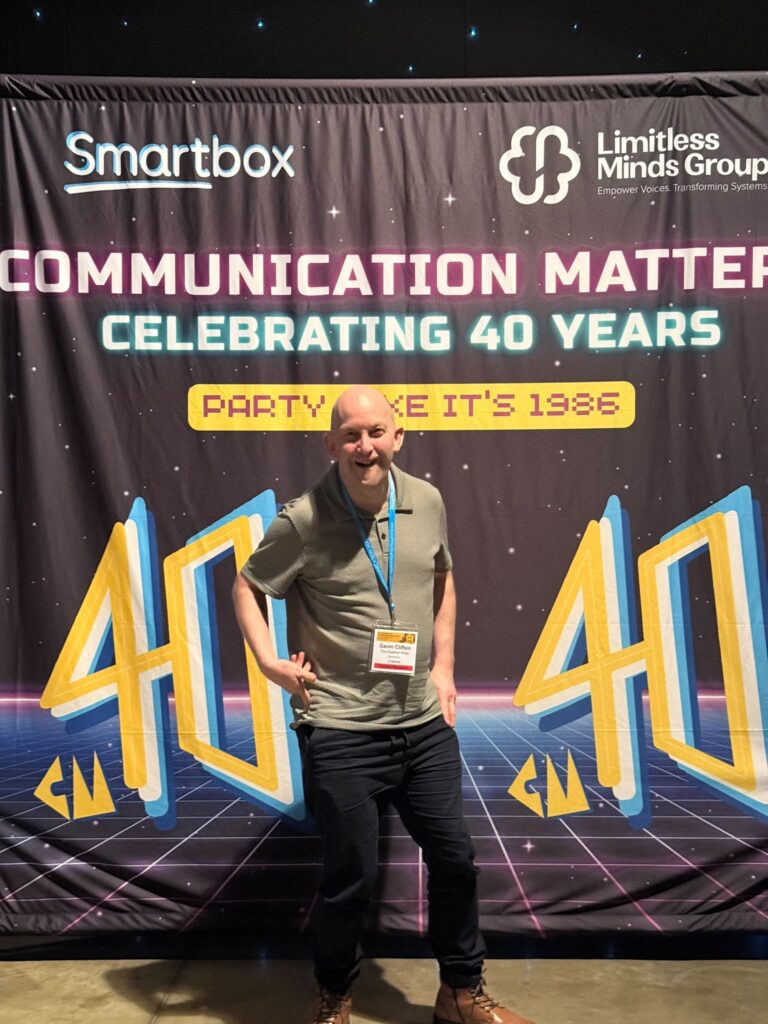
This month changed things. Speaking at Cardiff Met – The Power of Lived Experience

I was invited to give a talk at Cardiff Metropolitan University by Katherine Broomfield, a Senior Research Fellow and Speech and Language Therapist, and Ria Bayliss, Programme Director, Bsc (Hons) in Speech and Language Therapy, as part of their Interprofessional Education Training and AAC Group. I spoke about my life with cerebral palsy, my experiences with communication, and how AAC has shaped my journey, the good and the bad. The students were brilliant. Open-minded, respectful, and genuinely interested. Their feedback? It’s been some of the best I’ve had. They didn’t just listen, they embraced it with enthusiasm. They understood what it means to communicate differently, and how much that matters in practice. That sort of response makes a difference.

Smartbox – Giving AAC a Real Purpose

Later in the month, I visited the Smartbox Assistive Technology team in Bristol, one of the leading companies in the AAC field. They’re the people behind Grid 3, the software I use. Grid 3 is a communication tool that supports people who can’t rely on speech. It’s fully customisable and works with different access methods, eyegaze, switches, or touch. It helps people express themselves clearly, whether that’s through pre-set phrases, full conversations, social media, emails, or presentations. During the visit, we looked at how I use Grid 3 now and how to tweak it so it actually works for me, not against me. I was treated like a professional wanting to improve how I communicate. It was so refreshing to visit such a forward-thinking company that gets how it feels to want to be able to communicate more effectively in today’s ever-growing and fast-paced society. That felt powerful. Properly empowering, in fact.

A Shift in Thinking

I’ve come a long way since the early days of bulky Lightwriters and feeling like an afterthought in conversations. These days, my device gives me control. I choose when and how I speak. I can hold the room. That matters, especially when you’ve spent most of your life being spoken over, ignored, or having people make assumptions before they even get to know you. Let’s be clear, AAC doesn’t make life easy. But it makes life possible. It’s not a luxury. It’s not an extra. It’s how I get my voice out, in my way, on my terms.

Where I Stand Now

I’m beginning to develop a genuine appreciation for AAC, as I continue to see how effectively it supports me in expressing myself clearly and independently. If you use AAC, or support someone who does, know this: it’s okay to feel frustrated by it sometimes. It’s okay to want to throw it all out the window. But it’s also okay to come back to it, to find your way with it, and to say, “This is how I speak.”

This AAC Awareness Month reminded me that communicating differently doesn’t lessen my voice; it strengthens it. However, when I speak, it’s still me being heard. That’s what truly matters.

Here are links for Cardiff Metropolitan University Centre for Speech, Hearing and Communication Research and SmartBox Assistive Technology if you wish to explore AAC further:-

https://www.cardiffmet.ac.uk/research/research-and-innovation-centres-andgroups/centre-for-speech-hearing-and-communication-research/

https://thinksmartbox.com/

AAC Awareness Month: Different Voice, Same Message


Living with cerebral palsy and a speech impairment, I’ve learned that being heard isn’t always as simple as having something to say. It’s about understanding, empathy, education, and becoming less assumptive. You can have a voice, but if people aren’t listening, or they’re looking for someone else to speak for you, it doesn’t mean much.

Reducedimg 20250919 122530


That’s where AAC, or Augmentative and Alternative Communication, and now AI-Voice, comes in. For me and many others, AAC isn’t a nice extra. It’s how we communicate, how we connect. How we’re understood, and sometimes how we make friends and combat loneliness.

What AAC Looks Like for Me

I started with an old Lightwriter device years ago. It was bulky and slow, and most conversations had already moved on before I’d finished typing. I used it less and less, not because I didn’t want to communicate, but because it made me feel like I was always trying to catch up.
Things are different now. Technology has moved on, and so have I. I use modern AAC and AI-Voice tools daily, including text-to-speech software, which helps me give talks in schools and to organisations, and interact with people confidently. Whether I’m answering a pre-recorded question at an inspirational talk or simply ordering some lunch, it gives me the chance to speak on my own terms.


It’s About Communication, Not Gadgets

AAC isn’t one-size-fits-all. It could be a phone app, a tablet, a symbol board, or something high-tech, like AI-Voice. Whatever it looks like, it’s about communication, pure and simple. The way someone expresses themselves might be different, but the message is the same: we all want to be heard, understood, included, and respected.
It’s not about making assumptions. It’s about slowing down and giving someone time to speak in a way that works for them.


School Visits and Breaking the Ice


When I visit schools, the children are often curious about how I speak. I use AAC and AI-Voice to share my story, and once they see how it works, the questions start, and that’s brilliant. Children are open, honest, and keen to understand. That’s the beauty of it.
In schools, I don’t just talk about disability. I talk about acceptance, kindness, and how everyone communicates differently. I show them that AAC or AI-Voice isn’t something to feel awkward about; it’s just another way of speaking. By the end of the session, the focus moves away from the technology and onto the stories, the learning, and the genuine connection.


Inspirational Speaking: Changing Perceptions Beyond the Classroom


Outside of schools, I also speak at events, conferences, and organisations, anywhere where people need to understand disability, accessibility, identity, and what genuine inclusion looks like. It’s all about the power of storytelling and opening minds through my lived experiences.
When I speak to professionals, carers, parents, or decision-makers, I use the same AAC and AI-Voice technology, but the message is tailored. It’s about raising expectations, not just of disabled people, but of the systems around us. It’s about making people reflect on how they communicate, who they include, and who gets left out of the conversation.
I speak honestly about what it’s like to live with cerebral palsy and speech impairment, not to be inspirational for the sake of it, but to show what’s possible when support, collaboration, understanding, and opportunity come together.
Whether I’m speaking to five-year-olds or frontline staff, I’m there to challenge assumptions, get people thinking, and prove, through action, that disabled voices belong at every table.

Getting AAC Support


Getting access to AAC and AI-Voice in the UK isn’t always straightforward. Services are stretched, and sometimes it takes a bit of patience to get the right support in place. But when it’s there, it makes a huge difference. It can be life-changing.

AAC or AI-Voice doesn’t replace speech, even if someone is nonverbal; it opens up communication in whatever way works best. It’s not about replacing anything. It’s about including people properly.

During AAC Awareness Month, Let’s Remember:
• Communication comes in many forms.
• Everyone deserves to be heard, in their own way.
• Taking a bit of extra time to listen makes a big difference.
• There’s no shame in using support; it’s about equitable access.

Final Thought


AAC and AI-Voice have given me the tools to speak clearly, confidently, and independently. It’s more than a device; it’s my voice, and it’s beginning to open up opportunities I would have never imagined undertaking years ago.
Every voice deserves to be heard. Every voice matters.
P.S. - If you want to explore my journey using AAC in more detail, download my eBook, Empowering Communication. It’s a personal and practical guide for parents, professionals, and anyone supporting AAC and AI-Voice users.

Download the eBook here - https://amzn.to/4gOmq3e.