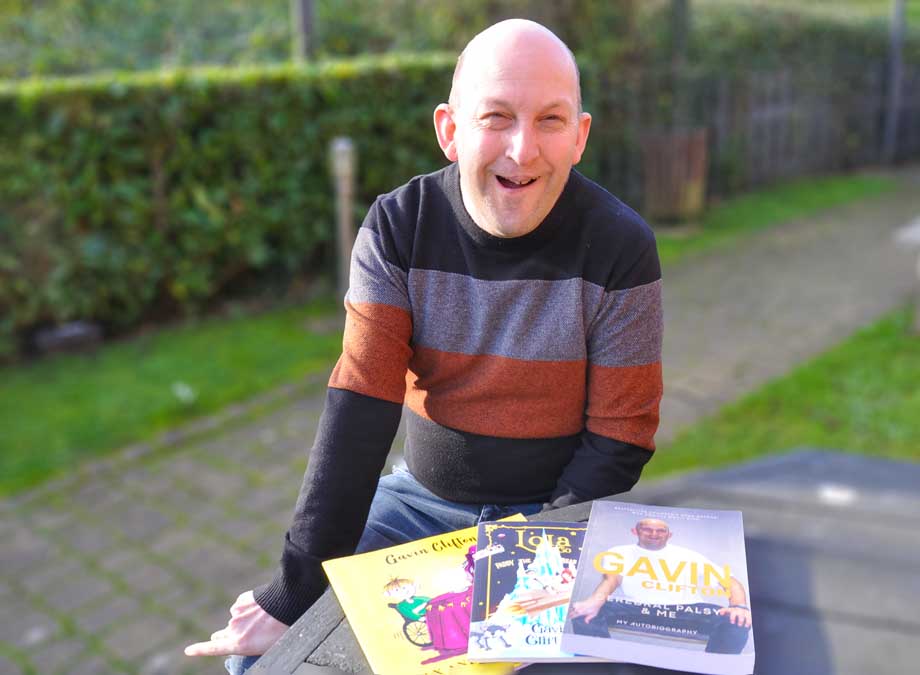
Gavin Clifton is a UK-based children’s author, inspirational speaker, disability advocate and lyricist. Known professionally as The Disabled Writer, Gavin was born with cerebral palsy and a severe speech impairment.
The book that sits on the shelf
Most children’s books that include a disabled character are written, in effect, for non-disabled children. The character is developed to teach themes like patience, courage, kindness or gratitude, and as soon as the lesson is delivered, the story moves on swiftly. The disabled character serves a specific plot point or a few dedicated scenes, not the whole storyline.

I understand why these books exist. Adults want to prepare children for a diverse world that includes disabled people, and a story is a good way to do just that. The intention is rarely the problem. What is important is what the disabled child on the other side of the page takes from it.
Presence is not representation
Publishing has become better at putting disabled characters on the page, but inclusion and authenticity aren’t the same as agency in the story. The useful questions and statements are simple. Who wants something? Who is leading or making the decisions? Who is allowed to be funny, wrong, strong, or difficult? A character whose main job is to be understood by everyone else is included, but they are not given the story.
My own position has not wavered across any of my work. Disabled characters belong in stories. Not only as a lesson or as the brave exception, but just there, being themselves, doing their thing, the same as anyone.
What a hero does that a lesson cannot
A hero stands for or wants something, makes mistakes and makes decisions that change what happens next and determines the story’s path. The child reading that story spends the length of that book willing them on. They feel what they want and they worry when they face trials. Understanding develops from that journey and the investment from within, rather than from instruction, which is why a child who has spent a book alongside a disabled character rarely needs an assembly on disability and acceptance afterwards.
For disabled readers, the impact is more subtle but arguably larger. Children’s books are among the first places children learn who gets to be at the centre of the plot; this is why I write stories the way I do, from lived experience. A child who never sees someone like themselves holding the map, globe, pendant, or crown is likely to assume these experiences aren’t meant for them.
What to look for in a book about disability representation
For parents, teachers, personal assistants, and librarians choosing books, these questions are more reliable than a label on a cover.
Where this leaves my own writing
These are the questions I follow when creating my own stories. The Anya series, illustrated by Alison Howard, is the latest place where I try to answer them. The latest book in the series, Anya and the Crown of Silence, will be published on the 12th November 2026, and I would love for readers to judge it on these grounds and values.
Children work out early who stories are for. I would like more of them to find out it was them.