Everyone With Cerebral Palsy Is Different. Now What?


‘Everyone with cerebral palsy is different’ is completely true. It might also be the most useful sentence ever invented for not doing anything.
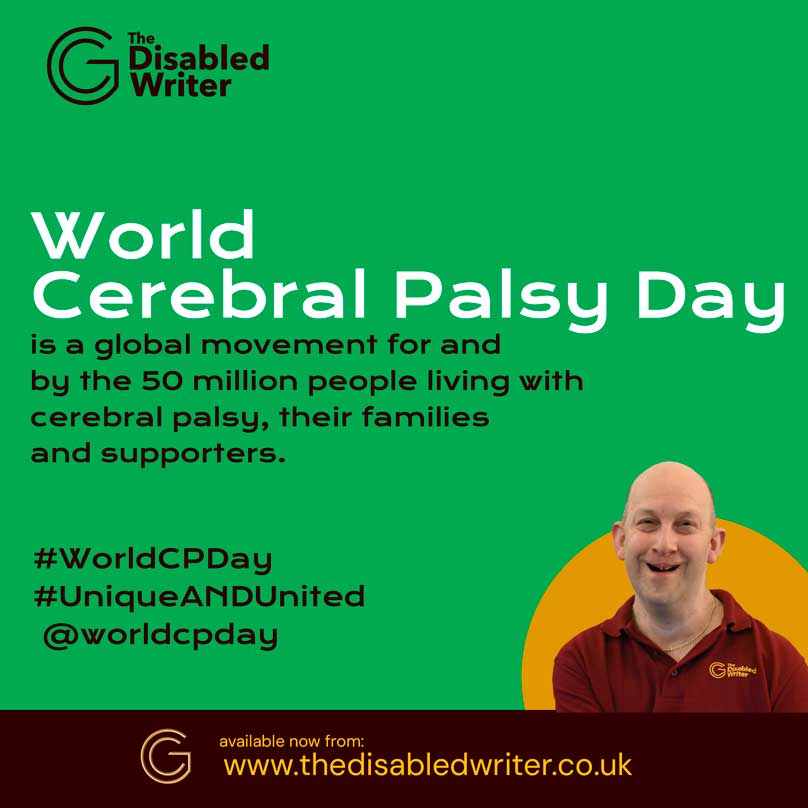
This year, World Cerebral Palsy Day (2026) is on Tuesday 6th October, and the theme is Unique and United, back for a second year. A year ago, on the same day, I became an ambassador for Cerebral Palsy Cymru. So I’ve had twelve months to think about what those two words really mean.
CP DAY WEB


I walk, go to the gym, and work out within my own limits. Lately my hamstrings have been tightening up more often, and on those days my body can use up to three times the energy of a non-disabled person’s to do the same things.
A while back, I started using a wheelchair again. ‘Again’ is a word that sometimes surprises people. When I was a child, my hamstrings tightened so quickly when I walked that I sometimes used a wheelchair on our caravan holidays in Devon, so we could get around quicker and stay out longer. Then for years you wouldn’t see me in one. I would go through the pain barrier some days to stay out playing with friends.
People expect disability to go in one direction. They perceive that your disabilities improve over time, which makes a nice story, or that you get worse, which makes a sad one. Going back to using a wheelchair as an adult doesn’t fit either, so people assume the worst. They ask what’s happened. Nothing’s happened. My body is doing what it has always done. I’ve just stopped pretending that energy is free.
Using the chair for mobility isn’t me giving up on walking. I still walk; I just use my powered wheelchair when walking costs me the rest of the day, so I can leave a bit of energy in the tank.
So that’s one man who walks, uses a wheelchair and talks with a device, sometimes all in the same week, and looked completely different on paper ten years ago. If cerebral palsy can be that different inside one person, ‘unique’ is underselling it.
Another person with cerebral palsy might do none of that. They might be able to walk farther than I can, or not at all. They might speak more clearly than I can, be nonverbal, or use eyegaze or switches. An injury to the developing brain causes cerebral palsy, but everyone’s experience of it is unique. So yes. Unique.
The trouble is what people do with that. ‘Every case is different’ sounds respectful, and it’s usually said kindly. But listen to where it often leads. We’ll take it as it comes. We’ll sort the access on the day. We’ll work out the communication when they get here. We’ll see, and the ‘we’ll see’ tends to mean the disabled person turns up and does the planning on the spot, in front of everyone. Sending my accessibility rider out in advance is meant to cut that bit out. It doesn’t always.
This isn’t treating someone as unique. It’s treating difference as a surprise, but the difference is the least surprising thing about us. If you know for certain that the next person with cerebral palsy through the door won’t need the same things as the last, you already know enough. More time on the clock and more than one way to answer. Allowing space for a wheelchair if someone is using it that day, or even someone who’s happy to wait a while for someone to form a sentence using their communication device.
None of that needs my diagnosis. It needs to consider everybody in all your planning processes.
Which brings me to ‘united’, and I think people misunderstand that word too. United doesn’t mean we’re the same. It certainly doesn’t mean we all agree. It means we keep walking, rolling and typing into the same unready rooms.
Last month I gave a talk at Communication Matters in Leeds. More than five hundred people attended. AAC users, families, and professionals. In a room like that, communicating differently isn’t odd. That’s the ‘united’ bit for me. A space that was built for us.
On World Cerebral Palsy Day, landmarks will light up green. Then on Wednesday, the lights will dim for another year, and somewhere, someone will tell a person with cerebral palsy that every case is different, mean it kindly, and leave it there.
It is. Every case is different. That was only ever meant to be the start of the sentence.
Holding Out for a Supportive Kind of Hero

Everyone has been singing Total Eclipse of the Heart this week. Fair enough. It's one of the most iconic songs of all time, has been covered by many artists, and has been featured dozens of times onscreen in movies, television shows, and commercials. It’s seven minutes long and worth every one of them.

When Bonnie Tyler died on Wednesday, the 8th of July 2026, the tributes came fast. The Prime Minister. Rod Stewart. Catherine Zeta-Jones. Every one of them talked about the voice. That gravel, and unforgettable roar. Rightly so. There was nobody else who sounded like her, and there probably will never be again. Bonnie was an icon engraved in Welsh folklore for eternity.

I read many of those tributes, and the one that touched me personally is one from another of my heroes, Rod Stewart. He didn't write an essay. Just a few lines on Instagram, white text on a black background. He said they had a similar way of singing, that she was a good pal, and that he sings It's a Heartache every night on tour. Then, the same day the news broke, he got up with Jools Holland and sang it for her. That's the part that tugged on my emotional strings and brought a tear to my eye. He's been singing her song every night for years anyway. He never needed her to die to start honouring her. Still, amongst all of these tributes, I was looking for two words that barely appeared anywhere – CEREBRAL PALSY.

Here's what most people never knew. From the 1990s, Bonnie Tyler was a patron of the Bobath Children's Therapy Centre in Cardiff, the charity now known as Cerebral Palsy Cymru. That's thirty years, give or take. In 2013, she campaigned for the centre to be recognised at the Pride of Britain Awards. She backed appeals and fundraising campaigns while touring the world. No press push or campaign video with sad piano music. She just kept on giving her unwavering support, raising much needed awareness, and making a difference with her unique voice.

I know all this because last October, on World Cerebral Palsy Day, I became an ambassador for the same charity. Her name was already on that page when mine was added. I won't pretend that it didn't mean something special.

Obituaries are a list of loud things. Chart positions, record sales, even Eurovision. The quiet things don't make the edit, and not because they didn't matter; they don't make the edit because they were never designed to be recognised in the first place.

There's a version of advocacy that's all noise. Placards, hashtags, arguments won on television. My whole approach has been to effect positive change by using words. It turns out one of the biggest voices Wales ever produced did her disability work the same way. The woman who could out-sing a hurricane chose, for thirty years, to whisper.

That kind of work doesn't get noticed. It's not meant to. There's just a therapy centre in Cardiff that kept its doors open, year after year, partly because a global star decided it mattered, and never made a fuss about it.

Total Eclipse of the Heart will be played forever. At weddings, at karaoke nights, at every solar eclipse until the end of time. The other thing she did never charted. It was never supposed to. The real chart-topper is that fabulous state-of-the-art therapy centre in the heart of Cardiff, and a child with cerebral palsy is getting therapy her name helped make possible. That child may never know the song, but that's alright. I don't think Bonnie was doing it to be remembered, but one thing I do know is that her legacy will never be totally eclipsed; it will shine bright endlessly, because at some point in our lives, we all need a hero.

Cover Reveal: Cerebral Palsy & Me, Second Edition

Cover Reveal: Cerebral Palsy & Me, Second Edition

I’ve been sitting on this for quite some time, and it’s finally time to share it.

The second edition of Cerebral Palsy & Me is scheduled for release on October 6 2025, which also happens to be World Cerebral Palsy Day. Couldn’t have planned it better if I tried.

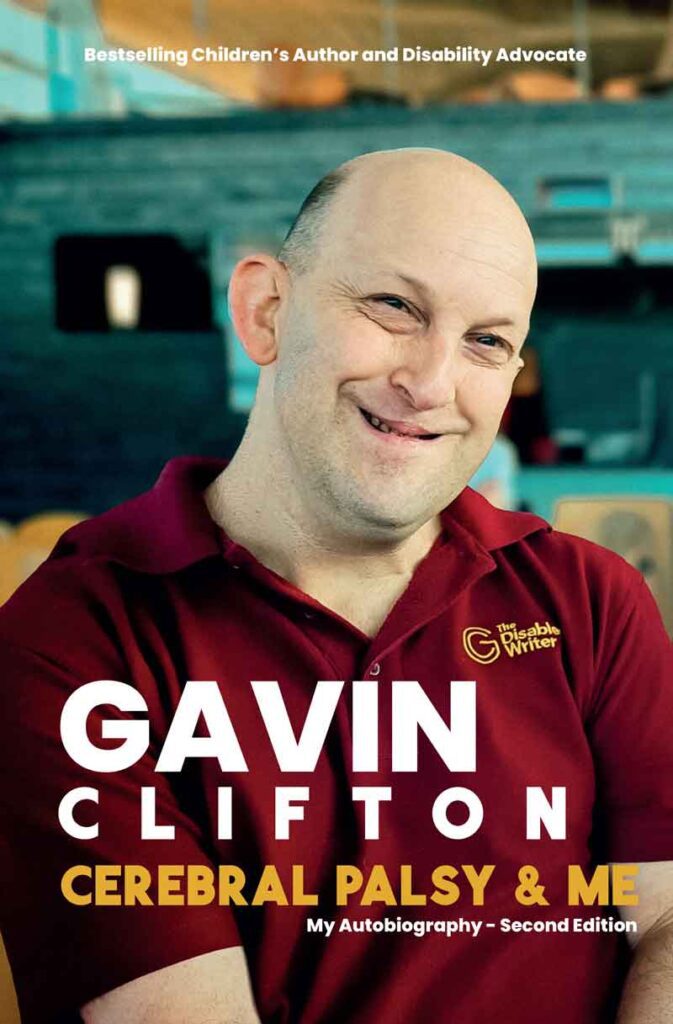
But before I tell you more about what’s inside, here it is, the brand new cover:

Cerebral palsy and me cover - This is the latest version og Gavon Cliftons Autobiography

What’s new inside

This isn’t just a quick reprint. I’ve added a new chapter, The Journey Continues: Life After Publishing, where I write about what changed once the first edition was out there. Having strangers read it and getting the reaction, feedback, comments, love, and reviews that I’ve received so far has been nothing short of overwhelming, allowing my self-acceptance journey to meander in life-changing directions. My confidence has grown significantly, and even though I still overthink and have moments of internalised ableism, I am much more resilient and advocacy-driven now than I was before chronicling my life story.

I discuss transitioning to become a solo self-published author and an inspirational speaker, and how finally falling in love with assistive technology has changed the way I communicate. I also write about being judged before I’ve said a word, about trying to carve out independence when your needs don’t always fit the mold, and about the moment people finally stop speaking on your behalf and actually listen with no judgment.

Why 6 October

World Cerebral Palsy Day isn’t just a date on the calendar. For me, it’s a chance to remind people that life with cerebral palsy isn’t all plain sailing, it’s a mix of the ordinary and the unexpected, it’s about co-independence most of the time, the tears, fears and the challenges and the small wins that don’t often get talked about.

Too often, the way disability is told feels limited, sometimes captioned as hard-luck or cheer-up versions that miss the middle ground. Neither really tells the truth. This book sits somewhere in the middle, straightforward, unfiltered, and splattered with humour. Publishing the new edition on 6 October 2025 portrays the right way to tie my story to a day that’s about visibility and change. It’s about educating others about disability and acceptance from lived experience, making a difference along the way.

It also keeps the conversation moving. Change doesn’t come overnight, but every time we speak up, every time we put our stories out there, the picture gets a bit clearer, opening the idea of creating a more accessible and inclusive world for everyone someday. Releasing Cerebral Palsy & Me, Second Edition, on World Cerebral Palsy Day is my way of taking part in that and hopefully giving others a nudge to do the same.

Looking ahead

Cerebral Palsy & Me, Second Edition will be available in paperback and Kindle on 6 October 2025.

If you read the first edition, thank you for walking alongside me. If this is your first time, welcome. This is my story, told in an unfiltered narrative, with humour and honesty that have carried me this far, and also into the future.

What readers said about the first edition

“Inspiring, thought-provoking, humorous and heartfelt. Had me laughing and feeling pensive in equal measures.” – Verified Amazon reviewer

“Humbling and insightful. Informative and emotive, lightened by humour. A true Welsh warrior.” – Amanda Aubrey-Burden

“An honest account that educates as much as it inspires. A must-read for anyone wanting to better understand disability and ableism.” – Lis

A small ask

Please share the second edition of Cerebral Palsy and Me on World Cerebral Palsy Day. Stories carry further when they’re passed on, and the more people read and hear them, the harder they are to ignore.