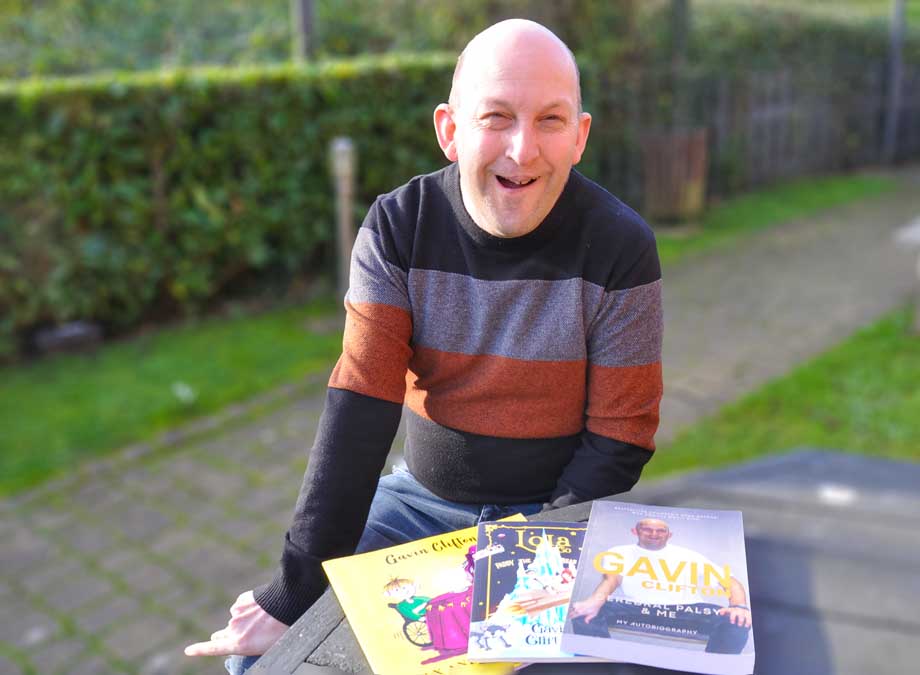
Gavin Clifton is a UK-based children’s author, inspirational speaker, disability advocate and lyricist. Known professionally as The Disabled Writer, Gavin was born with cerebral palsy and a severe speech impairment.
Why is there a wheelchair on the cover
People ask me about this a lot. The cover of Max and the Magic Wish shows a child in a wheelchair, and most people who meet me haven't seen me use one for years. There's usually a pause before they ask. Sometimes they never quite get to the question, and I can see it stirring there behind their eyes.
Here's the thing. It's a true story.
Max and the Magic Wish is based on a family holiday. A touring caravan pitched at a holiday park in South Devon, and a fortune teller I met on the seafront at Dawlish Warren. As children, we did the caravan thing every year. Pool, fishing lake, beach days, and a whole lot more.
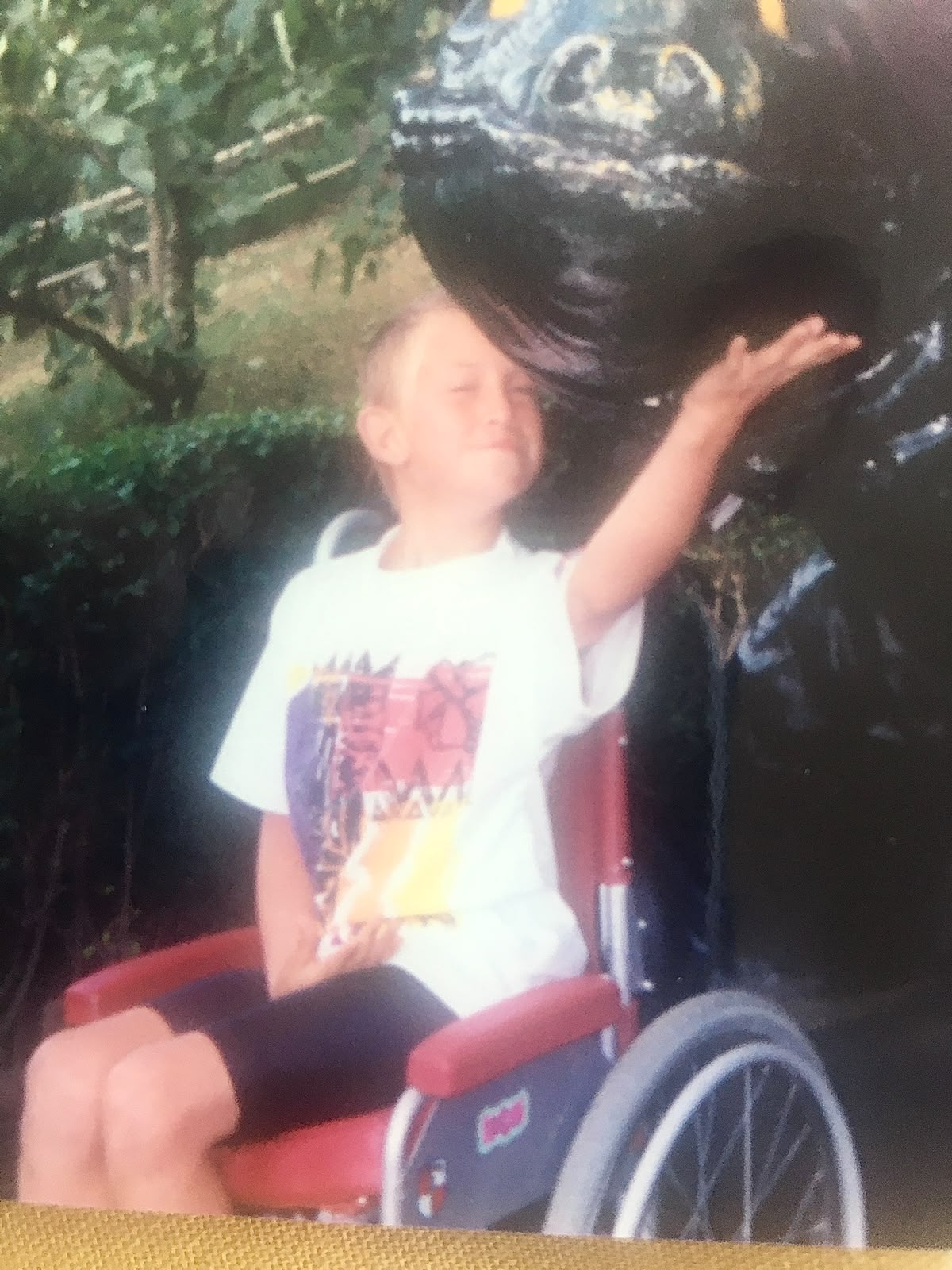
The wheelchair on the cover is from that particular chapter of my life. My hamstrings used to tighten up so fast when I walked that my parents put me in a wheelchair just so we could get around quicker and stay out longer. That was just how holidays worked for us. Nobody made a speech about it. We wanted to see more of Devon, so we used a wheelchair.
For years after that, you wouldn't see me in one. I exercised, and I still go to the gym and work out within my own limits. I got a physio when things played up, and I still do. I've recently had a chiropractic session.
Recently, I've started to notice my hamstrings begin to tighten up again more often, resulting in my body using up to three times more energy than non-disabled people more frequently these days. That's ok.
It's not a decline or a setback. It's a body doing what bodies do, and mine has always kept its own schedule.
What's changed isn't my legs. It's how long it takes me to admit when they've had enough, and I write about this in my autobiography, about my stubbornness, but most recently, I am starting to know my body’s limits a lot more often. I used to walk through the pain barrier. Push on to the car park, get to the end of the platform, and try to prove something to nobody in particular.
Now I think about the wheelchair on that cover differently. A younger me wasn't giving anything up in Devon. He was getting more day, enjoying more seafronts, more fishing lake, more fortune teller. The chair bought him time, and he spent it.
I don't know when I decided that was something to grow out of, and looking back, I now know that I should have let go of my stubborn streak a long time ago.
The question underneath the question is usually this: If you CAN walk, why do you need a wheelchair?
Nobody says it like that. But it's what they mean. There's an assumption that a wheelchair is a permanent state, that you're either in one or you're not, and the picture on my book cover should match the man standing in front of them.
That's not how bodies work. Not mine, anyway. Cerebral palsy isn't a fixed disability. Some days I walk fine. Some days my hamstrings decide otherwise. The wheelchair was a tool that got us further down the seafront.
It looks like a fun adventure story, and it is. But the imagery on the front was inspired by a childhood photo of me in Devon, in a chair, having a very good week.
The fortune teller story arc is all true, too. She even handed me six lottery numbers on a scrap of paper. We lost it years ago.
This could have been a very different article if we hadn't.
I don't think of that cover as a statement about identity at any one time in my life. I think of it as a holiday photo that happened to end up on the cover of a book about disability and acceptance. But other people can't see it that way, and I've stopped trying to make them. A child in a wheelchair on a children's book cover is still a message, even when it's just a memory.