Communication Matters Conference
The Communication Matters Conference 2026: Reflection, AI, agency, and an auditorium full of people who understood me.
I've had a few days to think about the Communication Matters Conference in Leeds, and what I keep coming back to isn't just the fantastic post-reaction surrounding my plenary talk. It's the conversation that's happening around it.
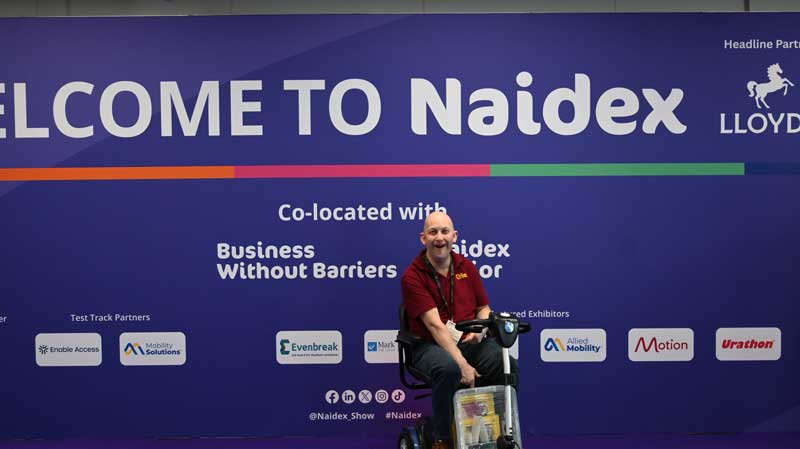
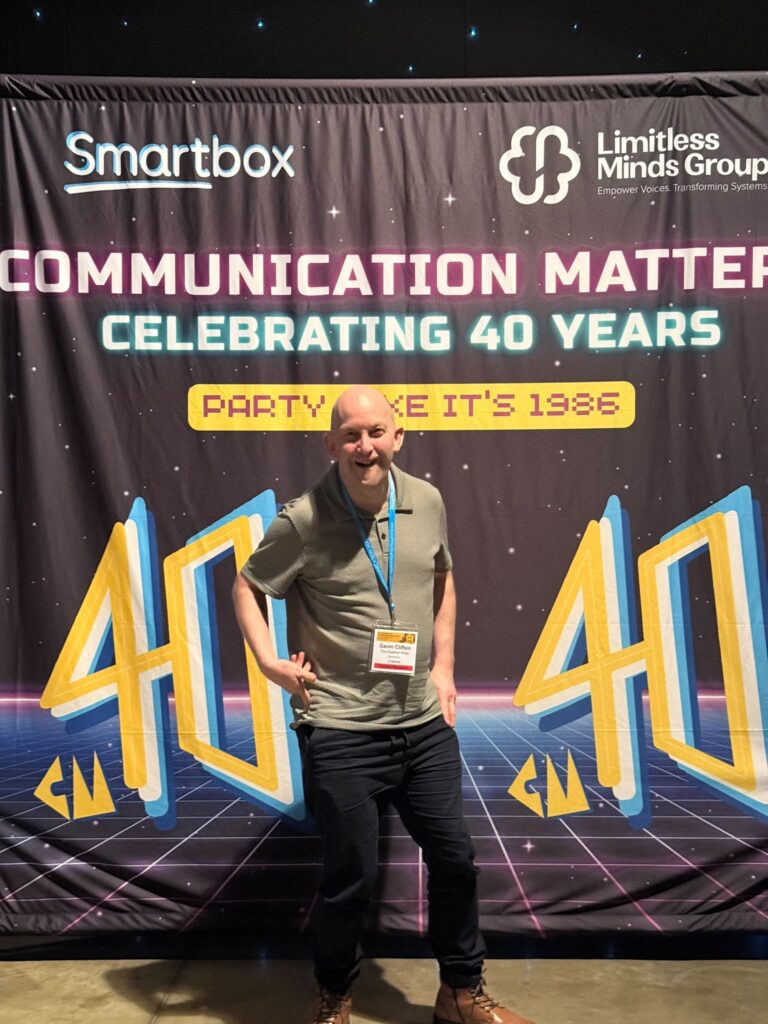
First though, the conference itself. Forty years of Communication Matters, more than 500 AAC users, professionals, and exhibitors, all gathered at the University of Leeds under the theme of limitless communication. I've been to plenty of events over the last few years, but I've never been in a space quite like that one.
Everywhere you turned, someone was communicating differently. Eyegaze users, switch users, people typing, people using BSL and symbols, people speaking with devices. Seeing this made me feel so much part of a community. Nobody batting an eyelid at any of it, just patient happiness and understanding.
For someone who has spent most of his life bracing for the moment the conversation moves on without him, three days of that melted my heart. A genuinely passionate, supportive community, and a forward-thinking one too. These are people actively building what comes next, not just sitting on what already exists.
Sarah, my PA, travelled up with me, and we both came home shattered and buzzing in equal measures.
The question nobody's asking nationally
King Charles has held an AI summit at Dumfries House, bringing together Nvidia, Google DeepMind, OpenAI and Anthropic alongside the UK's AI minister. He warned of the existential dangers and asked whether we need sufficient means of control before it's all too late.
Fair question. But it's not the only one worth asking. Four days earlier, at the University of Leeds, I was in rooms full of people asking something more specific. Not whether AI is dangerous in the abstract, but who it serves, and who stays in control of it, for people who now rely on it every single day just to be heard.
Day one of the Communication Matters Conference, I attended two discussions about how AI is beginning to change how AAC users communicate. There's more agency, certainly. Though I'd argue with varying amounts of authenticity, depending on how it's built and used. Those two things don't normally intertwine, and that's what I think gets missed when the conversation stays in the AAC world.
What technology I use, and why it matters
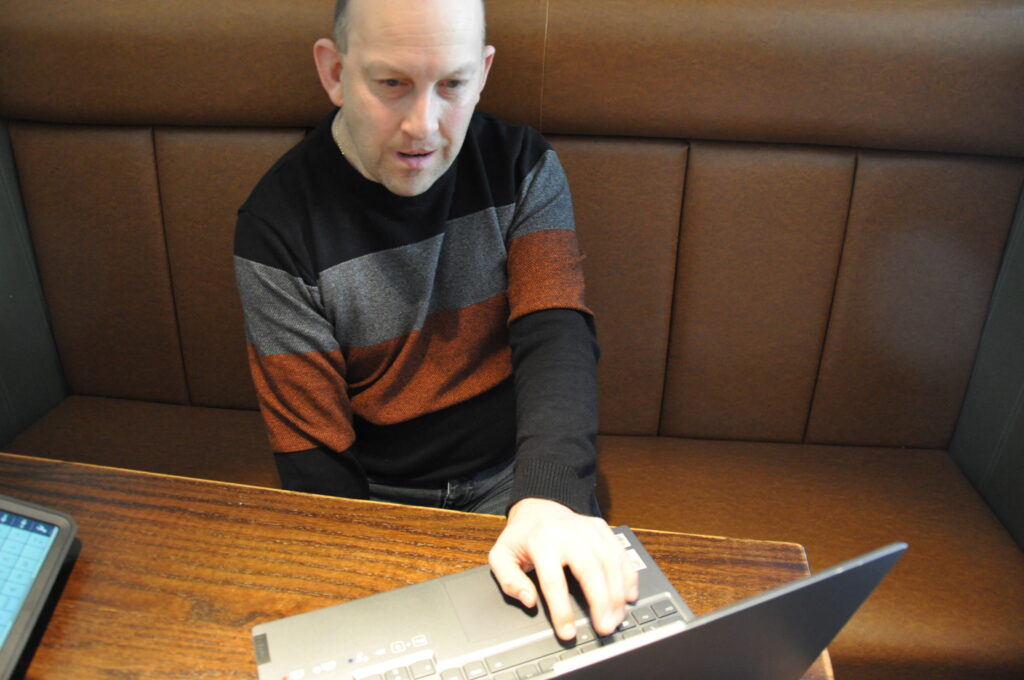
I use Smartbox's Text Talker AI beta within Grid3. Its Smart Prompt command takes keywords I've typed, fixes them, and expands them into full sentences, and even outputs them in different selected categorised moods. It lets me switch between two chats and store quick answers for question-and-answer sessions. That last one matters more than it sounds. When a child at a school visit asks me a question, I can answer quickly, instead of watching the moment pass while I type.
Smartbox's own position on this is that AI should support communication, never control it. Smart Prompt is built so the user stays in charge at every step. You opt in, choose from the responses offered. You can prompt it to try again, and the words that come out are still yours.
That distinction is the whole argument. AI that writes for you is a different thing entirely from AI that helps you communicate faster. One replaces your voice. The other removes a barrier that was never yours to begin with.
The authenticity question
I have been asked more than once whether AI makes my communication less authentic. My answer is straightforward. My thoughts were always my own. The delay has never been a lack of academic capability; it has just been about finding an accessible way to convey them at a quicker pace.
But I do think the sector needs to be vigilant. AI in AAC must be transparent, ethical, and legal. Users must know when AI is involved and how. They need genuine consent and to be clear on the terms of use. There needs to be a constant option to turn it off entirely.
Get this wrong, and you build something that speaks over AAC users rather than collaborating with them. Get it right, and you bring lots of people into the tempo of an ordinary conversation.
Being talked about before I'd said a word
Then there's the part I genuinely wasn't prepared for. Before I'd even taken the stage, I was told I'd been talked about in other people's presentations and discussions. My journey, being used by other people, to explain what's possible. I stood there flabbergasted. You spend years being underestimated, then you find out your story is being used as evidence in rooms you weren't in.
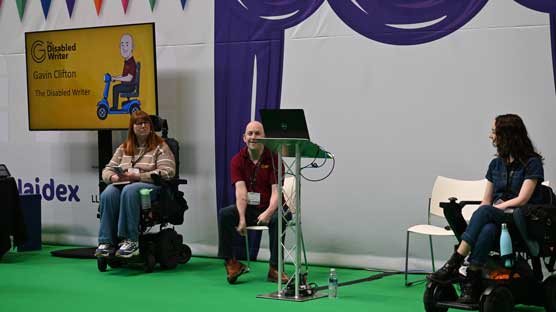
The plenary talk itself was on the final morning, in a fantastic auditorium at the University of Leeds, in front of hundreds of people.
The response I'm still getting my head around
Jamie Preece, a fellow AAC user, wrote in a social media comment that my presentation was one of the best he'd ever seen at a conference, and that he was still wiping tears away from it. When someone who communicates the same way you do tells you that, it hits differently. They know exactly what it takes to get there.
Angela messaged me to say she and her son attended. Her son is an eyegaze user, and it was their first conference. His speech and language therapist had been trying to get him to attend for years. They're glad they got the opportunity to listen to my talk.
Both of these responses have floored me. Somewhere in the audience, someone had felt so moved they felt the need to reach out, and a young man at his first-ever Communication Matters nearly didn't come.
Forty years, and the threads that connect
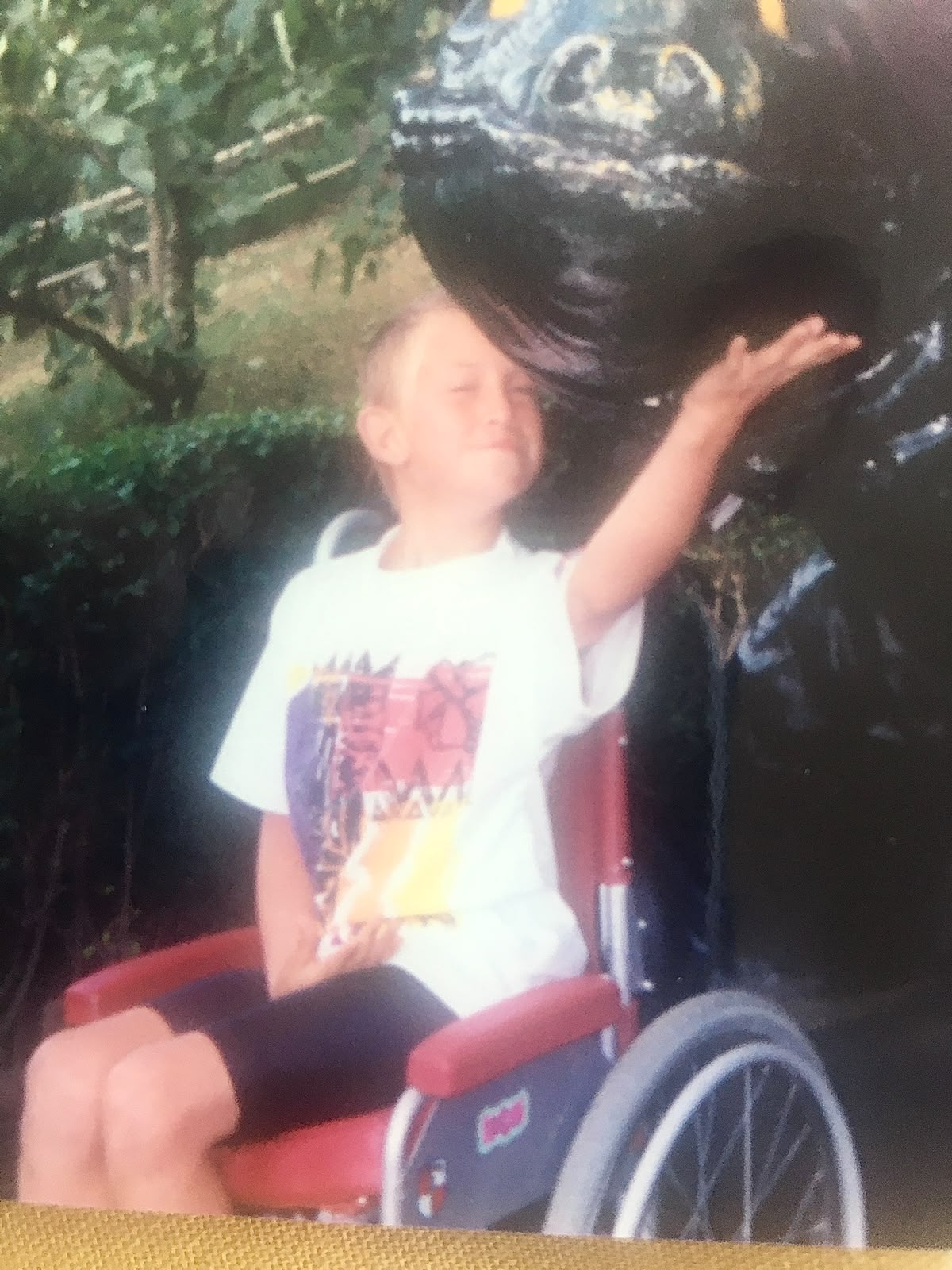
Simon has also got in touch about my reference to Toby Churchill, the man who invented the Lightwriter. My first AAC device was funded by my village, who dressed someone up as Father Christmas and locked him in a police cell until they hit the fundraising target. Simon mentioned he used to rant about the Lightwriter's design back in the nineties but came to see other perspectives on it eventually.
Forty years of Communication Matters, and the threads still connect like that. The device that was supposed to give me my first voice, the man who designed it, and a conversation about AI in 2026 that wouldn't exist without either of them.
I went to Leeds to give a talk. I came home having been part of something considerably bigger, and excited to find out where this journey takes me next.
Thank you, Communication Matters. Here's to the next forty years.