Cerebral Palsy Awareness Month always makes me reflect on how far I have come in life. It really does, not because I suddenly remember that I have disabilities, but because it’s one of the few occasions where people actively look in our direction. You can almost taste and feel the difference between ‘being seen’ and ‘being understood’. They are not the same thing, and if we’re honest, most of the disconnect lies in between them.
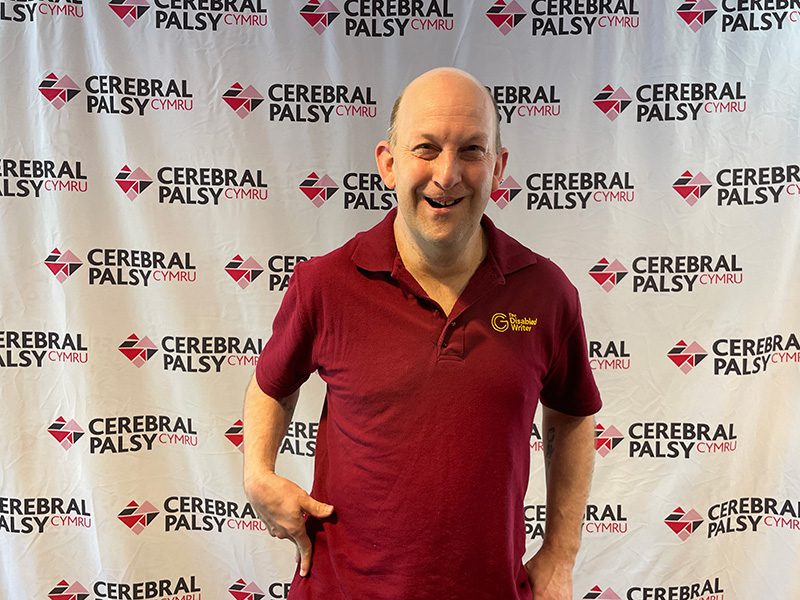
I’m writing this as someone living with cerebral palsy and a severe speech impairment, also as an ambassador for Cerebral Palsy Cymru, a role that genuinely means a lot to me, standing shoulder to shoulder with other people and families living with, managing, supporting, and advocating for the condition.
Cerebral palsy is a lifelong condition that affects movement, balance, coordination, and posture. It’s neurological and physical, and it doesn’t affect one person in the same way, which is exactly why the public’s understanding of it is often a little confused.
The variability is far-reaching, and this is the most important statistic I want to highlight throughout Cerebral Palsy Awareness Month 2026. If you have met one person with cerebral palsy, the next person might have completely different needs, a different level of mobility, a different experience of pain, fatigue, balance, coordination, speech, fine motor control, or all these.
One of the myths I still hear, and it honestly still surprises me, is the assumption that cerebral palsy is mainly a childhood thing. It isn’t, it’s lifelong. The assumption that happens is not that the condition disappears; it’s that support often becomes harder to access as you grow up.
Another idea is that CP automatically means a learning disability. Some people with cerebral palsy do have learning disabilities, for which I have complete admiration; others do not, but what keeps happening is that people treat appearance or speech as evidence of academic ability, or even inability. I’ve said it plainly in my autobiography because it frustrates me that much. I often get asked if I went to school, and the answer is yes; my disabilities are physical and not academic.
That assumption is not harmless; it alters expectations and opportunities, and in some cases, it changes the whole direction of a child’s education.
For me, support made the difference. I received one-to-one assistance from nursery onwards, which meant I could access school in the way I needed to. This changed my life forever, and for the better.
A lot of the public’s understanding of cerebral palsy is based on what people can see. The problem is that some of the most significant parts are not obvious to a stranger.
Fatigue is a big one. So are stamina, pain, tightness, and variability, too. Some days your body cooperates more than others, and the world tends to read that as inconsistent rather than reality.
Then there’s the social side, the childhood side, the stuff that stays with you.
One detail from my own life that always comes back to me is the safety helmet I wore in the school playground when I was learning to walk and still mastering balance. I remember feeling anxious about it because it made me look even more different, but it was a small price to pay if it meant avoiding head injuries. I even joked that I looked like I was about to do twelve rounds with Mike Tyson.
That’s what I mean when I say the lived version of cerebral palsy is not just medical. It’s social. It’s about being a child who wants to join in, while also having to think about safety and access in a way other children never do.
I’ve also been lucky in the way my friendships formed, because in my world growing up, I was just Gavin. My friends remember me wearing different shoes and that special helmet, and they remember that conversations took longer, but we still played the same games, and they adjusted so I could join in.
That is inclusion in its simplest form, people deciding you belong, and then acting like it.
Here’s the good news, a lot of what helps is practical, and it’s not complicated.
In schools, it starts with expectations. If you assume a disabled child is less capable before you’ve even learned who they are, you build a ceiling over their head. If you assume competence and put support in place, you give them a chance to realise their own potential. I believe every child deserves the right to an education, and I’m very aware that the support I had shaped my outcomes.
In public life and services, good practice looks like speaking directly to the disabled person, not treating them like a side character in their own environment. I’ve written in my autobiography, Cerebral Palsy and Me, about how infantilising it feels when people talk in the third person around you, and how much better it is when someone asks you directly first.
In workplaces and retail, it’s the same principle. Ask what helps, build flexibility into systems, not just into individual kindness. Remove friction where you can; most barriers are not created by ‘the condition’, they’re created by underthought systems and rigid assumptions.
To make this real, not abstract, I never thought I’d need a scooter. Now I wouldn’t be without it. It’s my freedom to live, not just exist.
I’m an ambassador for Cerebral Palsy Cymru because I care about support grounded in lived experience. In my book, I describe becoming an ambassador as the start of something meaningful, a role that means everything.
Organisations like Cerebral Palsy Cymru matter because they support people and families, and push for better understanding and practice, which is where the long-term change stems from. Not one month of awareness, but steady improvement in how systems respond, how communities include, and how people with CP are treated across a lifetime.
Here’s what I’d love people to take away from this month.
Cerebral palsy is lifelong, and it is varied. Support, access, and inclusion need to be lifelong and individual too.
If you do one thing differently after reading this, pause before you assume, ask what helps, then follow through.
That’s how awareness turns into change and makes a lasting difference: it’s okay to be different and to accept yourself and others.