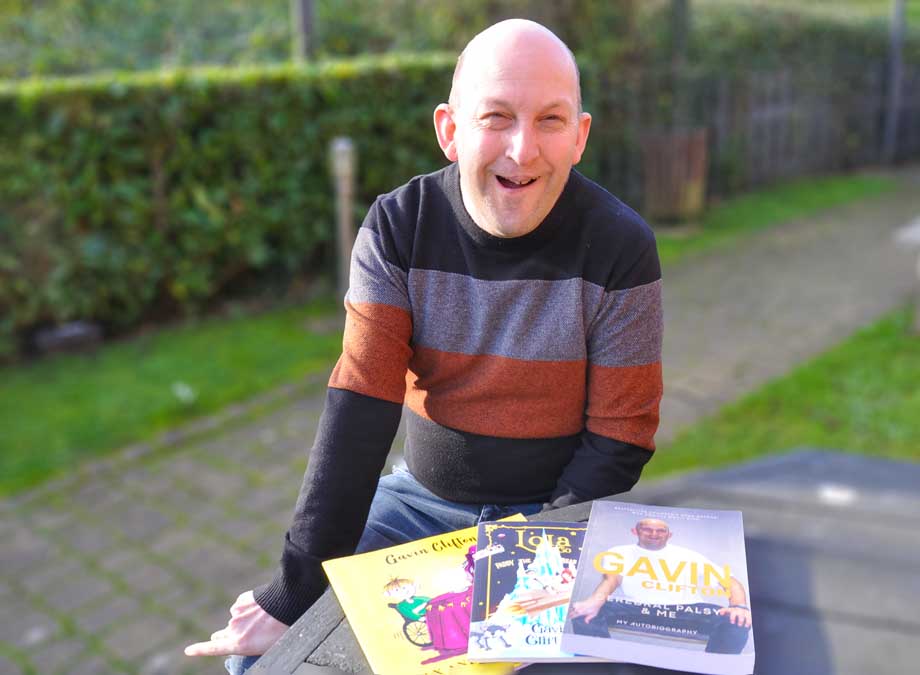
Gavin Clifton is a UK-based children’s author, inspirational speaker, disability advocate and lyricist. Known professionally as The Disabled Writer, Gavin was born with cerebral palsy and a severe speech impairment.
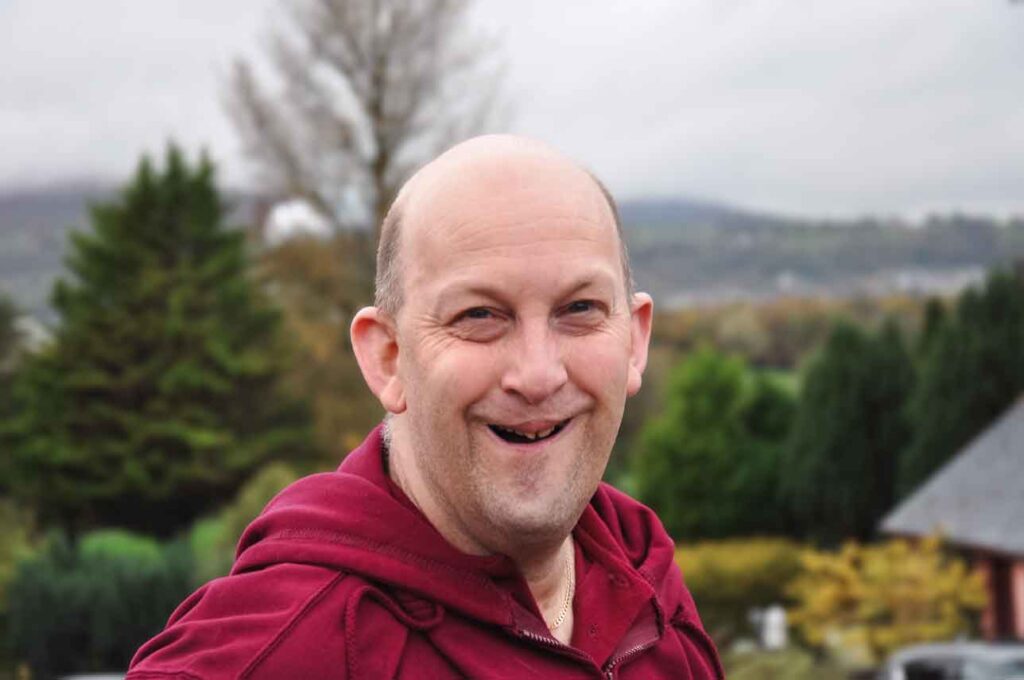
John Davidson didn’t envisage himself as an educator. The world just kept getting him wrong until he had no choice but to start correcting it.
I watched ‘I Swear’ on Netflix, the BAFTA-winning biopic about the Scottish Tourette’s campaigner who went from being brutally misunderstood in 1980s Britain to rightfully receiving an MBE for services to the Tourette’s community. Our disabilities couldn’t be more different, and our journeys look nothing alike on the surface. Yet, somewhere in the first twenty minutes, watching a young John Davidson be failed repeatedly by the people who should have supported him and known him better, something tugged at my soul and didn’t move.
Not because I recognised his condition, but I know what the lack of understanding can do. I’ve lived it.
The way misunderstanding compounds. The way people’s assumptions become your problem to overcome. That’s not just a Tourette’s problem; it’s an overall disability experience that spreads across conditions in a way disability representation rarely acknowledges, because most of it still broadly focuses on the specifics. Truthfully, that experience of being misunderstood feels remarkably similar regardless of your disabilities. This is what made the first twenty minutes an emotional watch.
People tend to assume that disabled people who become advocates, write, speak, and educate, do it purely out of necessity. That the choice was never really theirs.
It’s a bit of both. I had a turning point, so did John Davidson. But a turning point doesn’t exist in a vacuum. What shapes it is everything that came before. Those moments of being misunderstood, the authorities who had your future mapped out for you without finding out what you are truly capable of, the systems that had no category for who you were.
What ‘I Swear’ shows, keeping within the narrative of the story, is that John Davidson’s journey into advocacy wasn’t born from a single moment of inspiration. It was forced upon him. He became an educator because the alternative was to keep absorbing a world that had decided, without asking, that his Tourette’s journey wasn’t real or valid.
I write under the brand name ‘The Disabled Writer,’ creating disabled characters and books that centre disability, acceptance, identity, and the kind of courage that doesn’t announce itself. I’m also a U.K. Inspirational and disability awareness speaker. I write truthful blogs and articles about my experiences of living with cerebral palsy. I have also been writing song lyrics and collaborating on writing songs for over twenty years, working with the likes of 80s hitmaking band The Korgis and Phantom of the Opera’s Peter Karrie, and if you ask me why I started writing, the honest answer is, it’s a bit of both.
There was always a burning ambition deep down in my soul, even when I was working at a newspaper for seventeen and a half years. A genuine desire to create something within the boundaries of the world that truly mattered to me personally, even though my self-acceptance has been a rollercoaster ride. Still, somewhere in my conscience, I knew I had the potential to use my journey to make a real difference. I just needed to fight the fear of not being understood so I could become the man I am today. You can only stare at your fears in the face for so long before you either succumb to them or banish them for good.
But I think it’s worth being honest that necessity and choice aren’t always as separate as the inspirational narrative would have us believe. I was scared of being seen, of failing publicly, and of what people would think. For a long time, I wasn’t sure which was driving me more, fear or the purpose. I needed to figure this out, and I eventually did it through writing my autobiography, Cerebral Palsy and Me.
‘I Swear’ will make a lot of non-disabled people feel educated and moved. I truly hope it does just that. The performances are extraordinary, and the story is unfiltered.
But if you’re a disabled person watching it, I think you might feel something different. A recognition that sits somewhere between pride and emotional exhaustion. The pride of seeing someone turn their life around, the exhaustion of knowing how much determination and energy it takes, and the constant pushback that comes with it. The never-ending assumptions and the misunderstanding that follows you from room to room, year to year, however clearly you try to explain yourself. This is just one example of what survival with any dignity sometimes looks like when you have a disability.
John Davidson didn’t set out to be a role model. He just wanted to be understood. That’s the difference, and the film is honest enough to show it.
I came away not feeling inspired but feeling understood. Which, if you’ve spent any time being misunderstood, you’ll know is a completely different thing.