Space Exploration Doesn’t Start with Rockets. It Starts with Stories

The Moon is Trending

In April 2026, the Artemis II crew flew around the far side of the moon. They were the first humans to do it in over fifty years. The images were everywhere, with the Earth rising behind the lunar surface. A solar eclipse seen from a place no living person has witnessed, the whole world watched in awe, and to be honest, I became quite emotional.

When NASA asked the crew to describe the experience in a single word, mission specialist Christina Koch said ‘humility’. Not triumph or pride, but humility. I have been thinking about the meaning of that word.

A Rubbish Dump on Earth

I wrote a space-adventure children’s book back in 2020, and the character isn’t an astronaut. He’s a polar bear teddy stripped of his powers, dumped in a rubbish bin, and rescued by a nine-year-old girl called Oakleigh. She builds a rocket out of a cardboard box and kitchen roll holders and names it Hark-9.

People sometimes describe Paddy the Polar Bear Teddy as a cute space adventure story; it is, but it’s also about what happens when you land somewhere unfamiliar, when your normal has been taken away, and when the world you are navigating was unintentionally built without you in mind. I don’t have to create or imagine that; it’s the world I live in.

Tuesday Morning

There’s a moment in the book where Paddy lands in a rubbish bin on Earth and tries to use his magic to get home, and nothing happens. His powers are gone, he’s alone in a place he doesn’t understand, surrounded by creatures he’s never seen, and nobody can hear him. That’s not just fiction; it’s a Tuesday morning for many disabled people. You arrive somewhere, the thing you usually rely on isn’t working, and you have to figure it out in real time.

The Overview Effect and Taking a Step Back

What I find interesting about the Artemis mission is that the astronauts kept talking about perspective. Victor Glover, the first black astronaut to travel beyond the Earth’s orbit, looked back at the Earth and said that from up there, we all look like one thing. No matter where you’re from or what you look like. That’s the Overview Effect, the cognitive change that happens when you see your planet from far enough away that all the categories we cling to just fall away.

Stories do the same thing, no, not by sending you two hundred and fifty thousand miles into space, but by putting you inside someone else’s experience and letting you see it from there. When a child reads about Paddy losing everything and still finding a way forward, they are not learning about polar bears. They are learning that courage doesn’t require certainty, and that kindness, the kind where you pull a stinky teddy out of a rubbish dump because you see something worth caring about, is not soft, but the thing that starts the whole adventure.

The Villain Who Was Hiding

Then there’s Queen Zeena, the villain of the book; she’s a walrus who creates devastating storms across her entire planet because she’s terrified of being seen as she is. She thinks being different makes her unlovable, so she hides behind destruction. She’d rather ruin everything than risk someone looking at her and confirming her worst fear.

That fear factor, the shame, children understand it, even if they can’t pinpoint why yet. They know what it feels like to think something about yourself is wrong. Zeena isn’t defeated by force, but by someone who tells her the truth, that everyone is beautiful, and that what matters is who you are from within, and it’s okay to be different, accept yourself, and others. Paddy says it plainly because he believes it, and he’s lived it.

The Real Launchpad

Every astronaut was once a child imagining space. They started with stories, curiosity, and a sense of wonder about what’s out there. The Artemis II crew didn’t wake up one morning, knowing how to fly around the Moon. They followed their dreams, slowly building up experience, fuelled by imagination and the accumulated belief that anything was possible.

That’s what children’s books do when they do what job they’re supposed to do. They don’t just entertain; they teach, rehearse, give children a version of courage before they find it, and show them that difference isn’t always an obstacle, but sometimes it’s the qualification. That the people best equipped to explore the unknown are often the ones who’ve already had to.

Oakleigh doesn’t hesitate when Paddy asks her to fly to another planet, doesn’t have the right tools or experience, but still, she has cardboard, fairy dust, and the willingness to accompany him on an adventure. That’s not a fantasy; it’s how the most interesting things in life sometimes start.

The Artemis crew came home; the footage was extraordinary. But somewhere tonight, a child is lying in bed with a book open, imagining something impossible.

That’s where the next mission begins.

Disabled Creatives Don’t Need a Space - We Need a Stage.

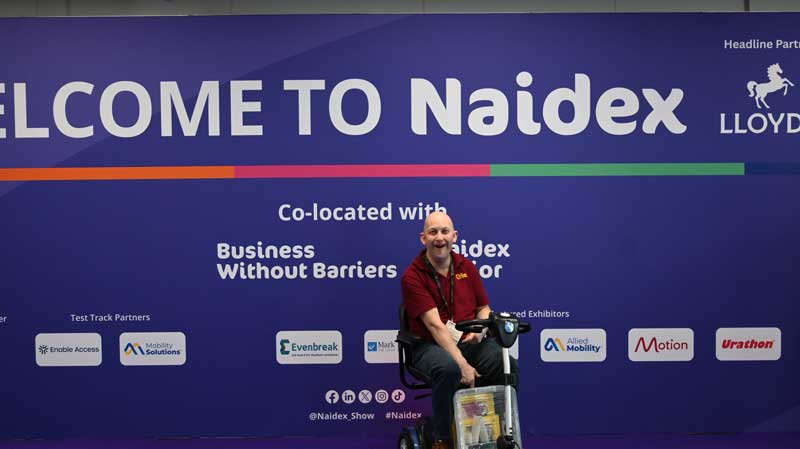
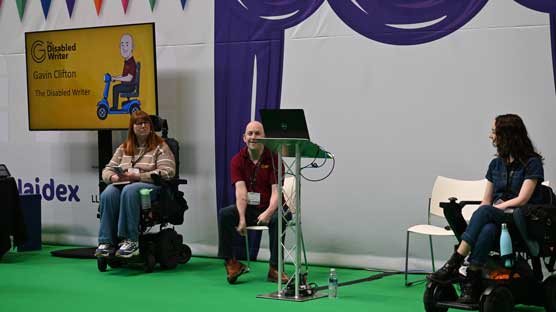
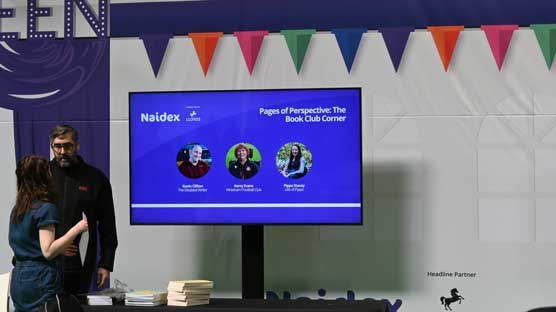
I sat on a stage at the Birmingham NEC and delivered my talk, From Page to Possibility: How Stories Shaped My Journey. I spoke via AI Voice to a room full of people from the disability community who came to listen. That alone felt worth writing about.


Gavin Clifton, in front of a banner for Naidex 2026


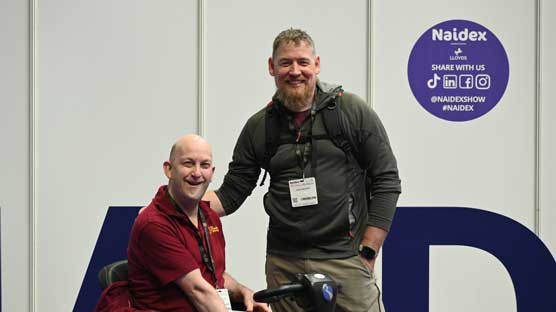
Naidex is one of the biggest disability events in the world. But what struck me most wasn't the technology, or the product demos, or the innovation on display. It was the room where nobody had to explain themselves. Where disability wasn't a topic to be handled carefully, it was just the air we were all breathing. That made me think: what would it take to carry that feeling outside of here?

Because when that feeling stays inside one event, it's a nice day. When it spreads into workplaces, schools, conferences, retail and hospitality spaces, and festival line-ups, it starts to change what people assume disabled people can do. Not just attendees or just audiences. But the ones making the work, leading the conversation, shaping the culture.

There's a thing that happens when disabled people are in a space together, and nobody else is setting the pace. You stop translating and performing the version of yourself that makes other people comfortable. You stop pre-empting the questions, the tilted heads, the 'you're so brave.' You exist, that sounds like nothing, but if you've never had it, it's everything.

After my talk, a stranger came up to me and told me it meant something to them. Not that it was inspiring, or that I was brave; that it meant something. That's a different word; inspiration asks nothing of the listener, meaning does. It says, ‘I'm taking this with me.’


Why It Matters Who Holds the Mic

That's what I've always tried to do with my work. When I wrote children's books like Max and the Magic Wish and Anya and the Enchanted Wheelchair, I put the disabled protagonist at the centre of the story, not as someone to be pitied or rescued, but as someone living a full life where the story is driven by magic, not by their diagnosis. But when you've spent most of your career being told your story isn't quite mainstream enough, not quite marketable enough, not quite enough. Standing on a stage and having someone tell you it matters hits you differently.

Events like Naidex have spent years getting better at showcasing products for disabled people. The next step is something harder: creating spaces where disabled people aren't just consumers, but contributors. Speakers, entrepreneurs, artists, writers, musicians, and filmmakers. Not as a diversity checkbox or into a twenty-minute slot between product demos. But as professionals, we do the work and are taken seriously for it.

My cerebral palsy shapes how I move and communicate. It doesn't shape what I have to say. I may not speak clearly, but I stood in front of a room full of people and said something that mattered to at least one stranger. That's not inspiration; it’s just what happens when someone is given a platform and has something worth saying.

I left Naidex feeling proud. Not grateful, but proud. Gratitude says thank you for letting me in, and pride says I belong here. I earned this, and I’d like to be booked just like any other professional.

Gavin is a children's author, inspirational speaker, and disability advocate. To book him for a talk, workshop, or school visit, visit his contact page.

Cerebral palsy is lifelong: What I wish people understood beyond the stereotypes

Cerebral Palsy Awareness Month always makes me reflect on how far I have come in life. It really does, not because I suddenly remember that I have disabilities, but because it’s one of the few occasions where people actively look in our direction. You can almost taste and feel the difference between ‘being seen’ and ‘being understood’. They are not the same thing, and if we’re honest, most of the disconnect lies in between them.

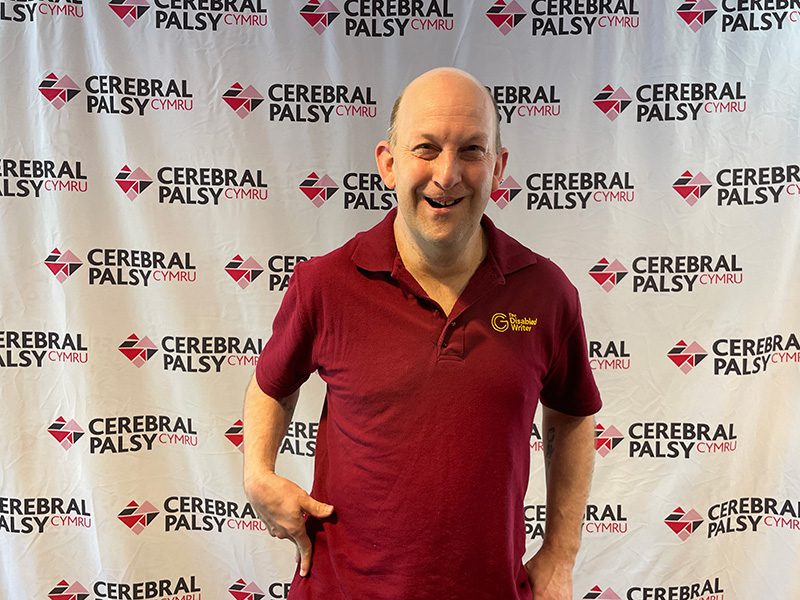
Gavin Clifton, Author, standing next to a banner for Cerebral Palsey Cymru

I’m writing this as someone living with cerebral palsy and a severe speech impairment, also as an ambassador for Cerebral Palsy Cymru, a role that genuinely means a lot to me, standing shoulder to shoulder with other people and families living with, managing, supporting, and advocating for the condition.

What cerebral palsy is, and why the ‘one story’ version fails

Cerebral palsy is a lifelong condition that affects movement, balance, coordination, and posture. It’s neurological and physical, and it doesn’t affect one person in the same way, which is exactly why the public’s understanding of it is often a little confused.

The variability is far-reaching, and this is the most important statistic I want to highlight throughout Cerebral Palsy Awareness Month 2026. If you have met one person with cerebral palsy, the next person might have completely different needs, a different level of mobility, a different experience of pain, fatigue, balance, coordination, speech, fine motor control, or all these.

The myths that still shape how we’re treated

One of the myths I still hear, and it honestly still surprises me, is the assumption that cerebral palsy is mainly a childhood thing. It isn’t, it’s lifelong. The assumption that happens is not that the condition disappears; it’s that support often becomes harder to access as you grow up.

Another idea is that CP automatically means a learning disability. Some people with cerebral palsy do have learning disabilities, for which I have complete admiration; others do not, but what keeps happening is that people treat appearance or speech as evidence of academic ability, or even inability. I’ve said it plainly in my autobiography because it frustrates me that much. I often get asked if I went to school, and the answer is yes; my disabilities are physical and not academic.

That assumption is not harmless; it alters expectations and opportunities, and in some cases, it changes the whole direction of a child’s education.

For me, support made the difference. I received one-to-one assistance from nursery onwards, which meant I could access school in the way I needed to. This changed my life forever, and for the better.

Lived reality, the bits people don’t see, and the bits you don’t forget

A lot of the public’s understanding of cerebral palsy is based on what people can see. The problem is that some of the most significant parts are not obvious to a stranger.

Fatigue is a big one. So are stamina, pain, tightness, and variability, too. Some days your body cooperates more than others, and the world tends to read that as inconsistent rather than reality.

Then there’s the social side, the childhood side, the stuff that stays with you.

One detail from my own life that always comes back to me is the safety helmet I wore in the school playground when I was learning to walk and still mastering balance. I remember feeling anxious about it because it made me look even more different, but it was a small price to pay if it meant avoiding head injuries. I even joked that I looked like I was about to do twelve rounds with Mike Tyson.

That’s what I mean when I say the lived version of cerebral palsy is not just medical. It’s social. It’s about being a child who wants to join in, while also having to think about safety and access in a way other children never do.

I’ve also been lucky in the way my friendships formed, because in my world growing up, I was just Gavin. My friends remember me wearing different shoes and that special helmet, and they remember that conversations took longer, but we still played the same games, and they adjusted so I could join in.

That is inclusion in its simplest form, people deciding you belong, and then acting like it.

What actually helps, and what I wish people would stop getting wrong

Here’s the good news, a lot of what helps is practical, and it’s not complicated.

In schools, it starts with expectations. If you assume a disabled child is less capable before you’ve even learned who they are, you build a ceiling over their head. If you assume competence and put support in place, you give them a chance to realise their own potential. I believe every child deserves the right to an education, and I’m very aware that the support I had shaped my outcomes.

In public life and services, good practice looks like speaking directly to the disabled person, not treating them like a side character in their own environment. I’ve written in my autobiography, Cerebral Palsy and Me, about how infantilising it feels when people talk in the third person around you, and how much better it is when someone asks you directly first.

In workplaces and retail, it’s the same principle. Ask what helps, build flexibility into systems, not just into individual kindness. Remove friction where you can; most barriers are not created by ‘the condition’, they’re created by underthought systems and rigid assumptions.

To make this real, not abstract, I never thought I’d need a scooter. Now I wouldn’t be without it. It’s my freedom to live, not just exist.

Why Cerebral Palsy Cymru matters, and what I want this month to lead to

I’m an ambassador for Cerebral Palsy Cymru because I care about support grounded in lived experience. In my book, I describe becoming an ambassador as the start of something meaningful, a role that means everything.

Organisations like Cerebral Palsy Cymru matter because they support people and families, and push for better understanding and practice, which is where the long-term change stems from. Not one month of awareness, but steady improvement in how systems respond, how communities include, and how people with CP are treated across a lifetime.

Here’s what I’d love people to take away from this month.

Cerebral palsy is lifelong, and it is varied. Support, access, and inclusion need to be lifelong and individual too.

If you do one thing differently after reading this, pause before you assume, ask what helps, then follow through.

That’s how awareness turns into change and makes a lasting difference: it’s okay to be different and to accept yourself and others.

AAC and AI-Voice: Why They’re Shaping the Future of Communication


Communication is often taken for granted until it’s not there. For me, living with cerebral palsy and a severe speech impairment, the difference between being listened to and being overlooked these days is simple: Augmentative and Alternative Communication and advancing AI-voice technology.
They aren’t devices or luxuries. They are assistive technology that upholds our dignity and are the key to being part of conversations that shape our lives.


Although my relationship with AAC hasn’t always been plain sailing and I’ve had a love-hate connection with it over the years, it’s now clear that with assistive technology improving in accessibility, it is enriching my daily life and helping me educate others about disability and acceptance.

My Voice, On My Terms

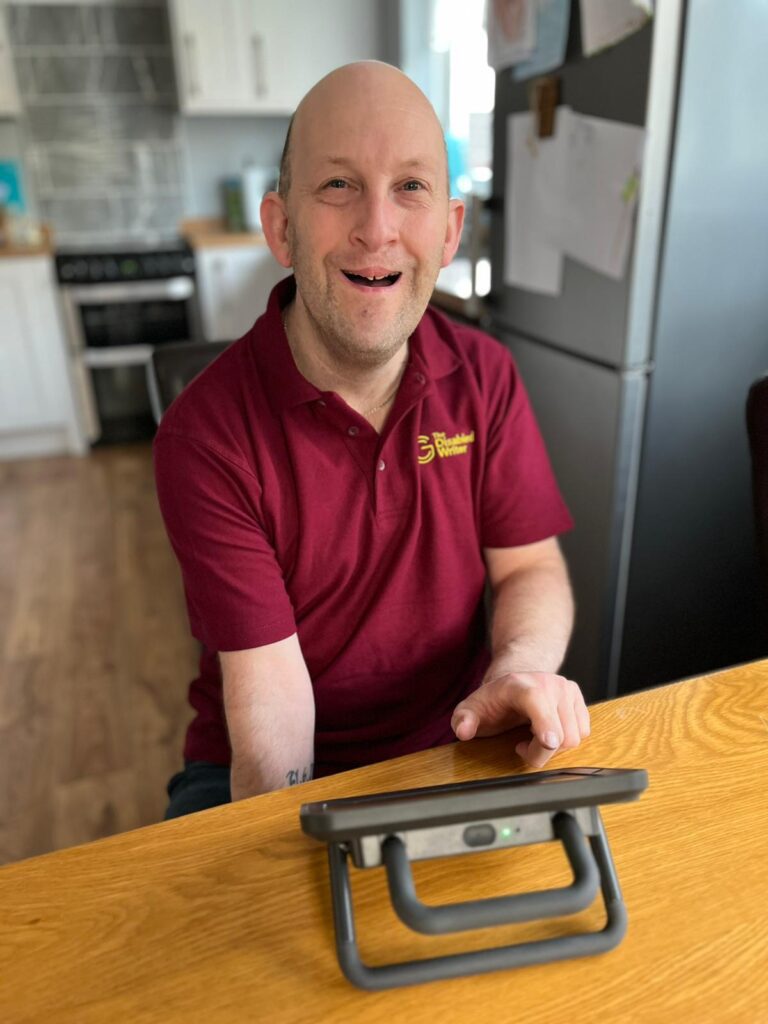
Without AAC, my words are often second-guessed. People jump in, finish my sentences, or answer on my behalf. With my SmartBox TalkPad 8, I take back control. I tap, I speak, I’m heard.
AI-voice goes further. Instead of sounding like a machine, I can have a voice that carries personality, warmth, and identity. That’s not a small upgrade, that’s self-expression.


Why This Matters Beyond Me

AAC and AI-voice aren’t just about giving individuals tools. They change how society understands communication:


What Needs to Happen Next


If AAC and AI-voice are to truly shape the future of communication, they must stop being treated as add-ons. That means:


The Future We Deserve


The future of communication isn’t about technology replacing human voices. It’s about expanding what we mean by ‘voice’ in the first place. AAC and AI-voice carry the potential to make society listen more widely, more fairly, and more humanely.
For me, these tools are the difference between silence and leadership. For the next generation, they can be the difference between being spoken over and being truly heard.
But this future won’t build itself. Access to AAC and AI-voice must be recognised as a right, not a privilege. That means:

This is a campaign that needs both individual voices and collective pressure. I’m asking you to stand with me, speak out about it, write about it, raise it in classrooms, offices, and communities. At the same time, call on leaders, educators, and policymakers to make AAC and AI-voice accessible for everyone who needs them.
Together, we can create a society that listens properly, one where no voice is left out of the conversation.

What I Wish People Knew About Living With Cerebral Palsy


Cerebral palsy isn’t a one-size-fits-all condition. It can be frustrating, and it's a lifelong journey. You might see a wheelchair or an unsteady walk, or notice a speech difference, and that’s as far as it goes. But living with cerebral palsy (CP) is a complex experience that goes beyond a diagnosis or a visible limp.
So here’s what I wish people understood. Not in a sympathy-seeking way. Just honestly.

It’s a lifelong condition, not an illness.


Unlike some other conditions, cerebral palsy is not progressive, meaning it does not get worse over time. It results from brain damage, usually before, during, or shortly after birth, and affects a person's movement, muscle tone, and posture.
I was born breech, not breathing, and left without oxygen for too long. That’s all it took. No two people with CP are the same; how it affects your body depends on the area and severity of the brain damage.
There are three main types:
● Spastic CP – stiff, tight muscles
● Ataxic CP – poor coordination and balance
● Dyskinetic CP – involuntary movements and fluctuating muscle tone
Some people have one type, and some have a mix like mine. There’s no upgrade, no fix. It’s a lifelong condition. We learn to adapt, not recover.


It affects your body in ways you don’t expect.


You’re not just dealing with mobility issues. There’s:
● Muscle stiffness that worsens in cold weather
● Pain from tight joints and spasms
● Fatigue that kicks in quicker than you’d think
● Communication difficulties (mine comes with a severe speech impediment)
● Extra diagnoses – epilepsy, cleft palate, poor coordination – many of us get a few ‘add-ons’

For me, right-side tightness makes walking harder as I get older. I’ve taken more falls in winter than I care to count, broken bones, bruised pride, the lot. It affects what I wear, where I go, even what time I leave the house. You don’t think about that when you hear 'CP.' But I live it daily.

Yes, it affects mental health too.


Imagine trying your hardest at something; your body just won’t do it. Or walking into a room and being judged for how you move or talk. It chips away at your confidence. Not always because of the CP itself, but because of how society reacts to it.
People sometimes talk over me. They ask my friends about me instead of speaking to me directly . Some assume I don’t understand or can’t reply. That’s not just annoying, it’s dehumanising.
I’ve had moments of anger, anxiety, and self-doubt. But here’s the thing, they’re not because I’m disabled. They’re because I live in a world not built for people like me.

Stop assuming you know what help I need.


I understand the impulse to help, and I appreciate it. But helping without asking first can sometimes do more harm than good. For instance, someone once grabbed me by the arm to 'help' me cross the road, even though the traffic had stopped and I had it under control . That sudden grab? It's not helpful. It's just scary. So, the next time you want to assist, just ask first.
You want to be kind? Great. Just ask, “Do you need a hand?” If I say no, respect that. If I say yes, excellent. It’s not rocket science.

My Final word


Cerebral palsy is part of me. It always will be. It affects how I walk, how I speak, how I move, and how I live. But it doesn’t define my intelligence, aspirations, or value. I can be stubborn, cheeky, witty, outspoken, and talented like anyone else.


So, next time you see someone with CP, don’t stare, don’t assume, and don’t talk to the person with them instead. Just treat them as you would anyone else. Offer your help if you think they might need it, but always ask first. And remember, they are not their condition. They have their own unique personality, interests, and talents. Acknowledge these aspects of their identity when you interact with them.
That’s all we want; to be treated like people.


I discuss all of the above in more detail in my autobiography, Cerebral Palsy And Me, which you can order here: www.thedisabledwriter.co.uk/books/

Why We Should Celebrate Our Differences: A Path to a More Inclusive World

Dsc 0801

We live in a beautifully diverse world where no two people are alike. Differences are all around us, whether it’s in how we speak, how we look, or how we experience life. But how do we respond to these differences? Some embrace them with curiosity and kindness, while others hesitate, unsure of how to react. As we approach International Day of Disabled Persons on 3rd December 2025, it’s the perfect moment to reflect on the importance of embracing differences, not just to be polite, but as a necessary step toward building a more inclusive world. For me, living with cerebral palsy has shown me the transformative power of acceptance and how much better the world is when we welcome all kinds of differences.

Personal Reflection

There have been many moments in my life when I’ve felt the weight of people’s judgments before they’ve even spoken to me. Take, for example, one of my earlier speaking engagements. As I stood at the front of the room, ready to deliver my talk, I noticed a few puzzled glances as I prepared my AAC device to help me communicate. Some of the audience members clearly weren’t sure how to react, and I could feel their uncertainty. They were used to speakers who stood up and spoke, and here I was, using technology in a way that wasn’t familiar to them.

But as I began to share my story and talk about the challenges and triumphs of living with cerebral palsy, I watched those puzzled expressions soften and change to embracing smiles and laughter. When I reached the end, people were nodding, cheekily laughing and fully engaged. What changed was their willingness to accept something different from the norm. That shift from hesitation to acceptance was powerful, not just for them but for me, too. It reinforced my belief that embracing differences opens doors to connection, learning, and growth. This was a notion of acceptance for me.

The Power of Acceptance

One of the most rewarding parts of my work as an author and motivational speaker is seeing people’s perspectives shift as they learn about disability. Whether speaking to a group of children in a classroom or a room full of professionals, the message is always the same: Embrace different and choose acceptance and understanding over judgement. We’re all different in one way or another, and those differences are what make life interesting. I’ve found that once people move past their initial uncertainties and start engaging with the person in front of them, all barriers come down, one step at a time, and meaningful conversations begin. It just takes a bit of persuasive education.

In schools, I’ve seen children’s eyes light up as they start to understand that it’s okay to be different. In professional spaces such as our workplaces and retail and hospitality venues, I’ve had people tell me they hadn’t considered how small changes like accessible meeting spaces or a bit of patience during conversations could make a massive difference for disabled people. In its simplest form, acceptance is recognising that everyone has something valuable to offer, no matter how they communicate, move, or experience the world.

A Call for Inclusivity

On International Day of Disabled Persons, there’s no better time to think about how we can all make a difference in our daily lives. Inclusion isn’t about grand gestures but our small, everyday choices to ensure everyone feels valued. Here are some practical ways to embrace differences and create a more inclusive environment:

Inclusivity starts with recognising that differences don’t separate us; they bring us together. By embracing these differences, we create communities where everyone has the chance to contribute, grow, and thrive.

Take a moment to think about how you can embrace differences in your own life. What can you do today to make someone feel more included? Sometimes, it’s as simple as waving or smiling at someone who looks unsure or asking how you can make a space more accessible for everyone. Inclusion is not just about being kind; it’s about actively choosing to see the value in everyone, regardless of their background or abilities.

I’d love to hear your thoughts. Have you ever been in a situation where embracing differences positively impacted you? Or have you felt misunderstood because of something that set you apart? Share your experiences in the comments below. Your story might inspire someone else to take a step towards inclusivity.

If you found this post helpful, please share it with others. Let’s spread the message that differences are to be embraced, not avoided. You can also join the conversation on social media using #EmbraceDifferences and #IDPWD2025. Let’s work together to create a world where everyone is valued.

Disability History Month: Embracing Difference, Challenging Stereotypes, and Celebrating Resilience

Disability History Month, Why It Matters

Disability History Month is a time to reflect on the experiences, stories, struggles, and victories of disabled people throughout history. Each story, including mine, is a testament to the incredible resilience that is a hallmark of the disabled community. It's a celebration of the human spirit's ability to overcome challenges. Every November to December, Disability History Month challenges negative and ableist attitudes towards disability and advocates for more equal and inclusive policies. This year, let’s explore what it truly means to embrace difference, choose acceptance and understanding over judgment, and challenge societal barriers.

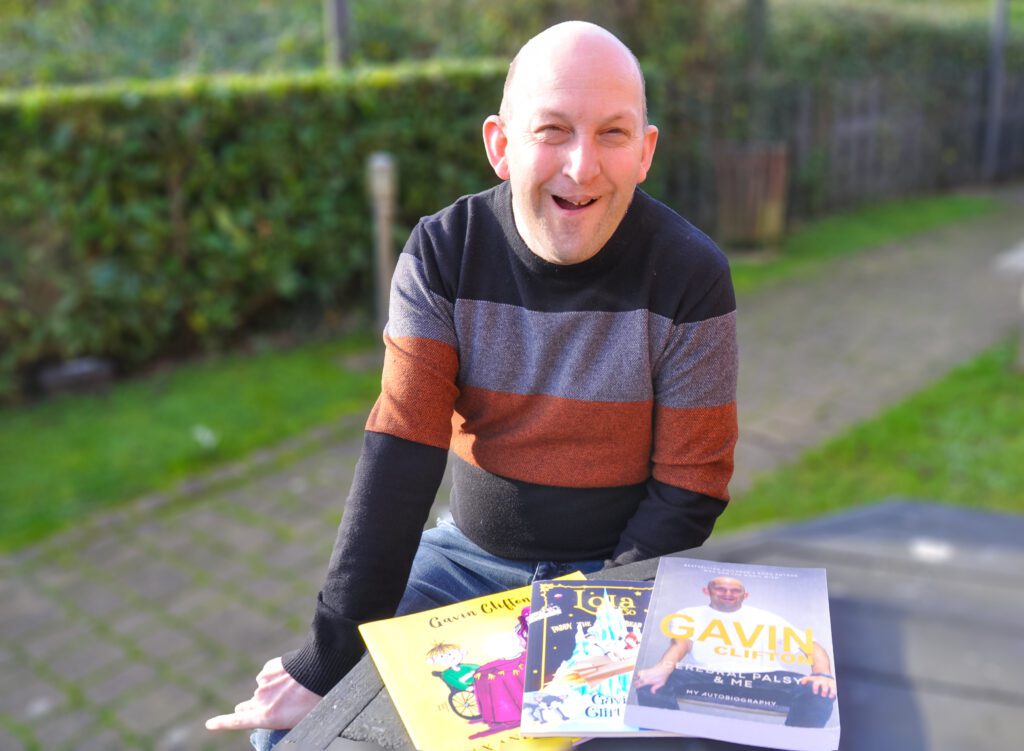
Gavin Clifton The Disabled Writer, sat with a collection of his Childrens books and his autobiography
Gavin Clifton The Disabled Writer

My Journey with Cerebral Palsy: Defying Expectations and Smashing Down Barriers

I was born with cerebral palsy, a neurological condition that affects my movement, muscle tone, and speech. From a young age, I have faced physical and social challenges that shaped my understanding of resilience and developed a stubborn, never-give-up attitude which never wavers. My parents fought hard for me to be educated in a mainstream school, which laid the foundations for my independence and social confidence, which hasn’t always been easy. Still, living with cerebral palsy has required me to adapt and navigate a world not always designed for disabled people.

My story isn’t about overcoming physical limitations; it’s about challenging misconceptions, especially the ones around my speech, capabilities and intelligence. This fits into the message of Disability History Month, which emphasises the Social Model of Disability. According to this model, it’s not our impairments but the societal and stereotypical barriers that ‘disable’ people. By removing these physical or attitudinal barriers, society can become more inclusive for everyone.

Cold Weather Challenges: Raising Awareness on Seasonal Struggles

As I have written in a previous blog and have explained on TikTok, the colder months bring unique challenges for disabled people, particularly those with cerebral palsy. Cold weather often worsens muscle stiffness and impacts balance, leading to heightened risks of falls and injuries. During these times, even daily tasks become more complex, and people with cerebral palsy need to adjust their routines to accommodate extended routine timings.

Disability History Month encourages empathy and awareness of more complex daily challenges, particularly affecting disabled people’s ability to participate in work and social settings. This seasonal perspective is an opportunity to increase education and understanding about how diverse disabilities are impacted by physical environments, which is crucial in developing accessible venues and spaces and in advocating for more inclusive policies.

The Role of AAC in My Life: Empowering Communication and Independence

For those who find verbally communicating challenging, Augmentative and Alternative Communication (AAC) has been transformative and life changing. From early experiences with bulky devices to today’s more flexible and accessible technology, AAC has empowered me to communicate more effectively in both professional and social settings. This technology is not just a tool; it’s a lifeline that allows me to advocate for myself and connect with others, whether it's within the disability community or beyond. The role of technology in empowering communication for people with disabilities is a significant aspect of the disability rights movement, as it demonstrates the power of innovation in creating more inclusive societies.

Understanding and embracing diverse communication methods is imperative to building an inclusive society. By broadening our concept of communication, we create spaces where everyone can participate fully, regardless of their abilities.

The Legacy of Disability Rights in the UK: Recognising Progress

Disability History Month also reminds us of the legislative and societal progress in disability rights. Still, we have a long way to go until we become a fully accessible and inclusive society. The Disability Discrimination Act (DDA) of 1995 was a landmark moment, as it was the first piece of UK legislation to protect disabled people from discrimination in employment, education, and services. This Act was later incorporated into The Equality Act 2010, providing even more comprehensive protections for disabled people. These legal advancements are milestones, pushing society towards the accessibility and inclusivity we advocate for today.

Celebrating Disabled Voices: Contributions in Culture, Arts, and Beyond

Throughout Disability History Month, we celebrate the cultural contributions of disabled individuals across fields such as literature, music, sports, and the arts. People like Stephen Hawking, who showed the world how intelligence and creativity could flourish despite his disabilities, and RJ Mitte, an actor with cerebral palsy who uses his platform to advocate for better representation and inclusion in the media, have left a lasting mark within the disability community and on our culture. Celebrating these voices helps broaden society’s perception of what disabled people CAN achieve.

Education and Awareness: Building Inclusive Foundations

Disability Awareness Month also strongly emphasises educating people about the lives and contributions of disabled people. Schools and educational organisations are continually encouraged to integrate disability awareness into their curriculums, helping reduce stigma from an early age. I firmly believe in advocating for disability awareness to be permanently installed into the national curriculum. I will continue my awareness surrounding this issue for as long as it takes. By learning about the experiences and achievements of disabled people, young students gain empathy and understanding, which are essential for building towards an inclusive future.

Moving Forward with Empathy and Understanding

Disability History Month offers an important and unique chance to deepen our understanding of what it means to live with disabilities like mine. However, awareness alone is not enough. Let’s use this month to inspire a continuous call to action that challenges us to make meaningful changes in our daily lives, communities, and workplaces. Let's not just stop at awareness but commit to making real, tangible changes that promote accessibility and inclusion.

Let’s go beyond words and actively promote accessibility and inclusion. Start conversations about accessibility, particularly in our workplaces and retail spaces, and advocate for representation in our media. When interacting with someone with a disability, practise patience, understanding, and open-mindedness. Genuine inclusivity happens when we make reasonable adjustments in everyday life, not just in special observances, as a token gesture. I encourage you to take concrete actions to promote accessibility and inclusion, whether advocating for better accessibility in your workplace or supporting media that accurately represents people with disabilities.

To gain more insight into the realities of living with cerebral palsy. I invite you to read my autobiography, Cerebral Palsy And Me. In it, I share my personal journey, the challenges, the triumphs, and the profound lessons I’ve learned along the way. You’ll also find my children’s books, which I wrote to educate and inspire young readers and parents of disabled children to embrace their differences and see value in each person’s unique abilities. My books are crafted from lived experiences, with heartfelt messages of hope, disability awareness, acceptance and resilience.

Together, let’s build a future where everyone can participate fully and live without limits, regardless of ability. Embrace differences and choose understanding over judgment, not just this month but daily.

Welcome to The Disabled Writer’s Blog: One Journey, One Mission!


My name is Gavin Clifton, and I’m excited to have you join me here! I created this blog as a personal journey, a safe place for not only people within the disabled community but for everyone who wishes to join me on my mission of sharing my experiences of living with cerebral palsy, overcoming challenges, and spreading the message of hope, especially to parents of disabled children.


Who Am I?
I was born with a neurological condition called cerebral palsy (CP), which affects my movement, muscle tone, motor skills, and speech. Growing up, I faced many physical and emotional obstacles, but I’ve always believed that my disability does not define me and that it is simply a part of my story. I’ve worked to achieve my dreams, even when society or my body seemed determined to stand in my way. Still, hopefully, I can use this crazy journey of disability and self-acceptance to educate and empower a realisation of a more accessible, inclusive, outward-looking and emphatic world, one small step at a time.
From a young age, I was taught that life would be challenging, but I also learned that resilience and determination could help me navigate those challenges. My journey hasn’t always been easy, but it has been one of self-discovery, learning, to continual self-acceptance and growth. Today, I’m proud to say I’m an author, disability awareness empowerment advocate, and motivational speaker. My key message, which I’ll share in this blog, is, "It's okay to embrace differences; choose acceptance and understanding over judgment."


Why I Started This Blog
I wanted to create this blog as a space where I can openly share my experiences living with cerebral palsy and the lessons I’ve learned along the way, laying everything bare and open for everyone to read, see, and experience. When I was younger, there weren’t many resources available for people like me, personal stories about what it’s like to live with a disability, to fight for inclusion, or to balance the highs and lows of life with a neurological condition. So, I decided to create that resource myself, alongside many other disability advocates who are fighting for equity in this modern era.
I know that many people out there feel misunderstood, judged, or even invisible because of their disabilities. Whether you have a disability yourself, know someone who does, or want to learn more, I hope this blog will enlighten you and inspire you to see the world from a different perspective. I want to encourage others to embrace their own differences and understand that there is strength in diversity.

My Mission
Throughout my life, I’ve made it my mission to educate and raise awareness about disabilities, particularly cerebral palsy, and to advocate for inclusion and accessibility in all areas of life. From public speaking engagements to writing, my goal is to help people better understand what it means to live with a disability, not just the struggles but also the triumphs and joys. I want to inspire and empower through using an unfiltered narrative through the power of words. All with a bit of cheeky humour sprinkled on top. I am slightly bonkers, after all.
One of the most important things I’ve learned is that disability doesn’t limit potential. Yes, it brings challenges, but it also brings unique strengths, perspectives, and opportunities for growth. In this blog, I’ll discuss everything from navigating daily life with cerebral palsy to breaking barriers in education and the workplace to promoting accessibility and understanding in our communities.

What to Expect from This Blog
This blog will be a safe space for reflection, education, and storytelling. I’ll be sharing personal stories about my journey, the challenging moments, tears, fears and victories, as well as practical advice for those with disabilities, their parents and families, and anyone interested in building a more inclusive world.

You’ll find posts on:

Let’s Embrace Differences Together
I’m so excited to continue this journey with you! Whether you’re here to learn, share, or simply be inspired, I hope you’ll find something in my story that resonates with you. My message to you is simple: It’s okay to be different. Embrace who you are and encourage others to do the same. Let’s build a world where everyone feels seen, accepted, and valued, regardless of their abilities.
Thank you for joining me on this journey. Stay tuned for more posts where I’ll dive deeper into my personal story, share disability advocacy tips, and much more. Together, we can create a more inclusive and understanding world.


If you’re interested in following my journey, please subscribe to my blog for updates on new posts. I’d love to hear from you; feel free to share your thoughts in the comments
below or contact me directly. Let’s start a conversation about how we can all embrace differences and make the world more inclusive.