Disabled Creatives Don’t Need a Space - We Need a Stage.
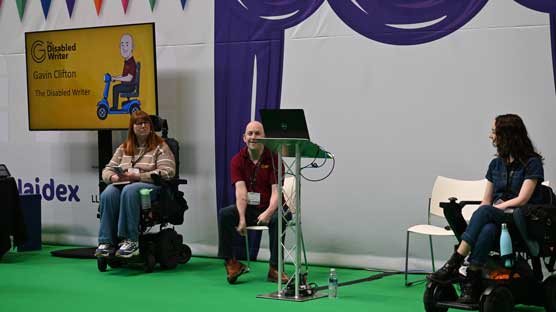
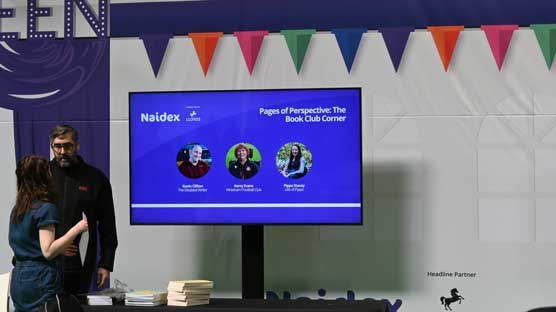
I sat on a stage at the Birmingham NEC and delivered my talk, From Page to Possibility: How Stories Shaped My Journey. I spoke via AI Voice to a room full of people from the disability community who came to listen. That alone felt worth writing about.
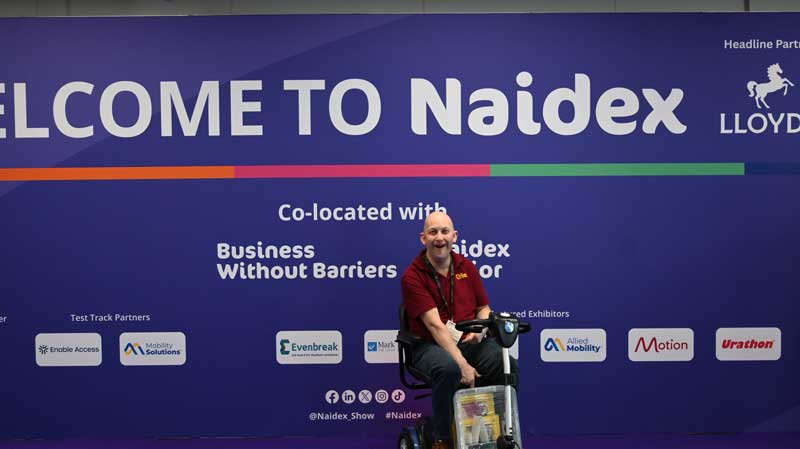
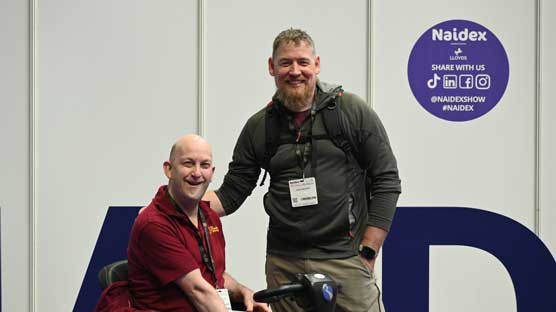
Naidex is one of the biggest disability events in the world. But what struck me most wasn't the technology, or the product demos, or the innovation on display. It was the room where nobody had to explain themselves. Where disability wasn't a topic to be handled carefully, it was just the air we were all breathing. That made me think: what would it take to carry that feeling outside of here?
Because when that feeling stays inside one event, it's a nice day. When it spreads into workplaces, schools, conferences, retail and hospitality spaces, and festival line-ups, it starts to change what people assume disabled people can do. Not just attendees or just audiences. But the ones making the work, leading the conversation, shaping the culture.
There's a thing that happens when disabled people are in a space together, and nobody else is setting the pace. You stop translating and performing the version of yourself that makes other people comfortable. You stop pre-empting the questions, the tilted heads, the 'you're so brave.' You exist, that sounds like nothing, but if you've never had it, it's everything.
After my talk, a stranger came up to me and told me it meant something to them. Not that it was inspiring, or that I was brave; that it meant something. That's a different word; inspiration asks nothing of the listener, meaning does. It says, ‘I'm taking this with me.’
Why It Matters Who Holds the Mic
That's what I've always tried to do with my work. When I wrote children's books like Max and the Magic Wish and Anya and the Enchanted Wheelchair, I put the disabled protagonist at the centre of the story, not as someone to be pitied or rescued, but as someone living a full life where the story is driven by magic, not by their diagnosis. But when you've spent most of your career being told your story isn't quite mainstream enough, not quite marketable enough, not quite enough. Standing on a stage and having someone tell you it matters hits you differently.
Events like Naidex have spent years getting better at showcasing products for disabled people. The next step is something harder: creating spaces where disabled people aren't just consumers, but contributors. Speakers, entrepreneurs, artists, writers, musicians, and filmmakers. Not as a diversity checkbox or into a twenty-minute slot between product demos. But as professionals, we do the work and are taken seriously for it.
My cerebral palsy shapes how I move and communicate. It doesn't shape what I have to say. I may not speak clearly, but I stood in front of a room full of people and said something that mattered to at least one stranger. That's not inspiration; it’s just what happens when someone is given a platform and has something worth saying.
I left Naidex feeling proud. Not grateful, but proud. Gratitude says thank you for letting me in, and pride says I belong here. I earned this, and I’d like to be booked just like any other professional.
Gavin is a children's author, inspirational speaker, and disability advocate. To book him for a talk, workshop, or school visit, visit his contact page.