It’s Not a Workaround. It’s How I Communicate Differently

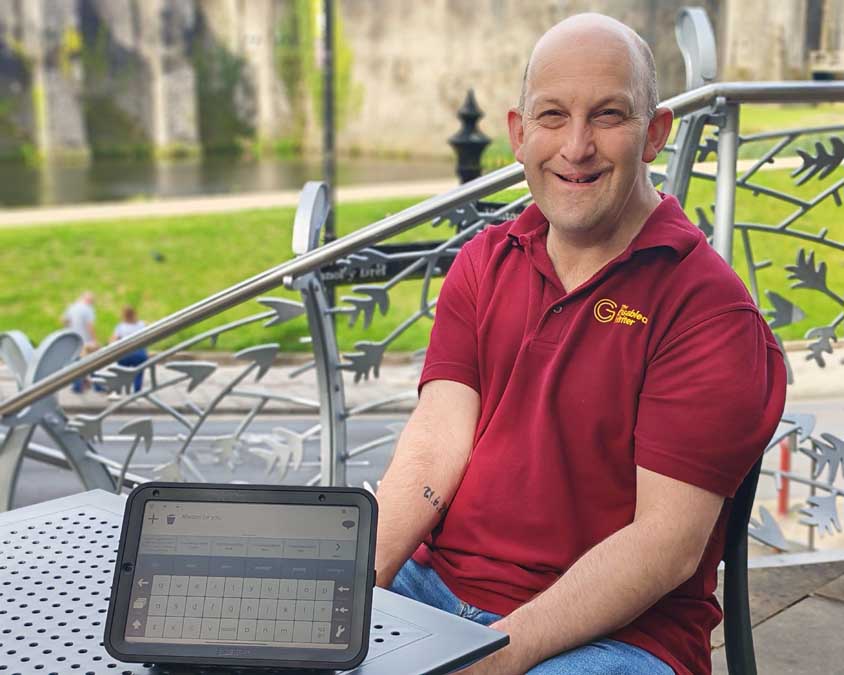
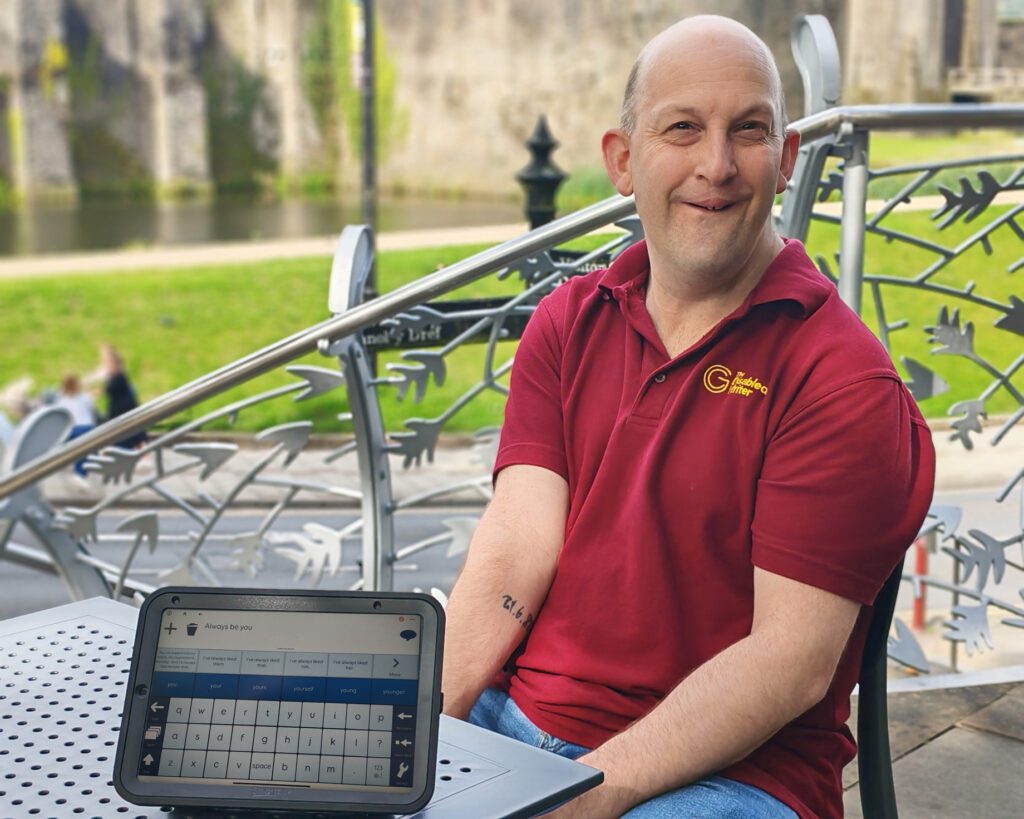
More often than not, my TalkPad starts with a witty one-liner. It breaks the ice, and people never know what to expect when I pull out my TalkPad. A one-liner in my AI voice tends to sort that out quickly. I sound Welsh in my head. The voice doesn’t sound quite like me, but I am okay with that, because the joke is still authentically mine.
IMG 20250919

My relationship with AAC started in my last year of junior school, and for a long time it was love-hate. My first device was a Lightwriter, and the keys were so stiff that pressing them felt like a workout, and I had to haul the bulky device everywhere. These days I use a TalkPad 8, a tablet, which is a lot easier to live with. I’m turning love-hate into love-love. I’m getting there.

Some of that is down to what it lets me do on my own. The things I usually need to say at the post office or grocery store are saved as quick answers on my TalkPad, so they are ready before I reach the counter assistant. My answers for TV, radio and podcast interviews are recorded in advance. So are my introductions at networking events and my inspirational and author talks, so none of it relies on someone else speaking for me.

That last part matters more than it sounds. Not long after my first book came out, I went on an American podcast without telling the host about my speech impairment. They said hello, I said hello back, and their face went blank. My publisher at the time was on the call and ended up doing all the talking for an hour about my book, while I sat there. I haven’t let that happen since. I don’t go anywhere without my TalkPad and laptop now, and when I’m on a show or on stage for an inspirational talk, the words are mine.

It’s October, which means it’s AAC Awareness Month, which means there are a lot of posts explaining what AAC actually is. Augmentative and alternative communication: letter boards, symbols, sign language, apps, devices, pointing, even facial expressions. That’s all useful. But I think people get one thing wrong. They see someone using AAC and assume they are watching a workaround, the second-best option for someone who can’t communicate as effectively as they’d like to. It’s not. It’s an accessible tool and how I get to communicate for myself.

The other thing people misunderstand is that the device only does half the job. The other half is being patient when listening. When I met a Member of the Senedd to talk about getting Max and the Magic Wish into Welsh schools, I played her a response I'd recorded on my communication aid. She listened to every word. No glancing at whoever was with me, no hurrying it along. It was a good meeting, and a lot of that was down to her. Years before that, the lady who became my first publisher met me outside a local pub. Yes, I know what you’re thinking. It wasn’t the most conventional way to meet a book publisher, but that’s truthfully where I met them. My mum came along in case the publisher couldn't understand me. We chatted for a while. A few days later, I found myself stepping onto a journey to becoming a published author.

It isn't all smooth. My friends reckon they understand my actual speech better after I've had a drink. Most people slur. Apparently, I get clearer. I'm still working out whether that's a breakthrough or a problem.

But the good conversations far outnumber the bad ones, and they have something in common. The person on the other side isn't doing me a favour. They're just waiting for me to finish, the same as they would for anyone.

The voice doesn't sound like me. When someone waits for the whole sentence, they still hear me.
AAC Awareness Month: Different Voice, Same Message


Living with cerebral palsy and a speech impairment, I’ve learned that being heard isn’t always as simple as having something to say. It’s about understanding, empathy, education, and becoming less assumptive. You can have a voice, but if people aren’t listening, or they’re looking for someone else to speak for you, it doesn’t mean much.

Reducedimg 20250919 122530


That’s where AAC, or Augmentative and Alternative Communication, and now AI-Voice, comes in. For me and many others, AAC isn’t a nice extra. It’s how we communicate, how we connect. How we’re understood, and sometimes how we make friends and combat loneliness.

What AAC Looks Like for Me

I started with an old Lightwriter device years ago. It was bulky and slow, and most conversations had already moved on before I’d finished typing. I used it less and less, not because I didn’t want to communicate, but because it made me feel like I was always trying to catch up.
Things are different now. Technology has moved on, and so have I. I use modern AAC and AI-Voice tools daily, including text-to-speech software, which helps me give talks in schools and to organisations, and interact with people confidently. Whether I’m answering a pre-recorded question at an inspirational talk or simply ordering some lunch, it gives me the chance to speak on my own terms.


It’s About Communication, Not Gadgets

AAC isn’t one-size-fits-all. It could be a phone app, a tablet, a symbol board, or something high-tech, like AI-Voice. Whatever it looks like, it’s about communication, pure and simple. The way someone expresses themselves might be different, but the message is the same: we all want to be heard, understood, included, and respected.
It’s not about making assumptions. It’s about slowing down and giving someone time to speak in a way that works for them.


School Visits and Breaking the Ice


When I visit schools, the children are often curious about how I speak. I use AAC and AI-Voice to share my story, and once they see how it works, the questions start, and that’s brilliant. Children are open, honest, and keen to understand. That’s the beauty of it.
In schools, I don’t just talk about disability. I talk about acceptance, kindness, and how everyone communicates differently. I show them that AAC or AI-Voice isn’t something to feel awkward about; it’s just another way of speaking. By the end of the session, the focus moves away from the technology and onto the stories, the learning, and the genuine connection.


Inspirational Speaking: Changing Perceptions Beyond the Classroom


Outside of schools, I also speak at events, conferences, and organisations, anywhere where people need to understand disability, accessibility, identity, and what genuine inclusion looks like. It’s all about the power of storytelling and opening minds through my lived experiences.
When I speak to professionals, carers, parents, or decision-makers, I use the same AAC and AI-Voice technology, but the message is tailored. It’s about raising expectations, not just of disabled people, but of the systems around us. It’s about making people reflect on how they communicate, who they include, and who gets left out of the conversation.
I speak honestly about what it’s like to live with cerebral palsy and speech impairment, not to be inspirational for the sake of it, but to show what’s possible when support, collaboration, understanding, and opportunity come together.
Whether I’m speaking to five-year-olds or frontline staff, I’m there to challenge assumptions, get people thinking, and prove, through action, that disabled voices belong at every table.

Getting AAC Support


Getting access to AAC and AI-Voice in the UK isn’t always straightforward. Services are stretched, and sometimes it takes a bit of patience to get the right support in place. But when it’s there, it makes a huge difference. It can be life-changing.

AAC or AI-Voice doesn’t replace speech, even if someone is nonverbal; it opens up communication in whatever way works best. It’s not about replacing anything. It’s about including people properly.

During AAC Awareness Month, Let’s Remember:
• Communication comes in many forms.
• Everyone deserves to be heard, in their own way.
• Taking a bit of extra time to listen makes a big difference.
• There’s no shame in using support; it’s about equitable access.

Final Thought


AAC and AI-Voice have given me the tools to speak clearly, confidently, and independently. It’s more than a device; it’s my voice, and it’s beginning to open up opportunities I would have never imagined undertaking years ago.
Every voice deserves to be heard. Every voice matters.
P.S. - If you want to explore my journey using AAC in more detail, download my eBook, Empowering Communication. It’s a personal and practical guide for parents, professionals, and anyone supporting AAC and AI-Voice users.

Download the eBook here - https://amzn.to/4gOmq3e.